

Grievance and Flawed Governance in Iran’s Baluchestan
nalberti
Tue, 08/19/2025 – 10:06
Grievance and Flawed Governance in Iran’s Baluchestan
What’s new? As Iran struggles with geopolitical tensions and economic duress, its periphery regions are facing additional challenges. Baluchestan, the southern part of Sistan and Baluchestan province, has experienced recurrent unrest. Many residents feel the government discriminates against them as a religious and ethnic minority. Militancy persists. Environmental concerns compound the difficulties.
Why does it matter? The central government’s repeated pledges to reduce poverty in Baluchestan through development and improved governance have been undermined by chronic mismanagement, lack of investment and suppression of dissent. Deepening socio-economic disparities, threats of militancy and growing environmental challenges are likely to bring greater strains.
What should be done? Enhancing popular participation in local governance, making economic reforms and improving environmental stewardship are the best ways to address Baluchestan’s entrenched crisis. But meaningful progress will require considerable support from the central government, notwithstanding the other huge challenges it faces at home and abroad.
Even as it recovers from its twelve-day war with Israel, faces increasing U.S. pressure and contemplates the prospect of renewed UN sanctions, Iran is struggling with domestic challenges that cry out for Tehran’s attention. Among these are the grievances of the Baluch residents of the volatile Baluchestan region. Baluchestan covers most of the south-eastern province of Sistan and Baluchestan. Two thirds of its inhabitants are Baluch – a primarily Sunni group that is ethnically and religiously distinct from Iran’s Persian Shiite majority. The region has seen years of underdevelopment, socio-political exclusion, repression and environmental degradation. It has also seen violence, including on 30 September 2022 – known among Baluch as “bloody Friday” – when state forces killed over 100 protesters. Though unrest has waned, its drivers remain unaddressed, providing grist for separatist groups, one of which provoked a clash with neighbouring Pakistan in 2024. Efforts to advance economic development and political inclusion – and to tackle environmental problems – can help put Baluchestan on a more stable footing.
Sistan and Baluchestan’s socio-economic deficits are stark. Residents suffer from chronic poverty, high unemployment, poor infrastructure and limited access to basic services such as clean water, health care and education. Governance failures are compounded by the province’s massive size, harsh climate and geographical isolation, contributing to persistent deprivation. Poverty fuels reliance on fuel and drug smuggling, which perpetuates insecurity and criminality. Government efforts to promote licit economic growth in the region have largely failed. The authorities tout the province’s strategic location, as it borders Pakistan and Afghanistan and is a gateway to the Indian Ocean, but ambitions for its development have fallen short. Projects such as the expansion of Chabahar port – intended to turn the region into a trade hub – have been stymied by sanctions, mismanagement and lack of sustained investment.
The Baluch population also contends with structural exclusion shaped in part by ethno-sectarian differences within Iran. Both an ethnic and religious minority, the Sunni Baluch struggle for equal treatment in Persian Shiite-majority Iran. They are underrepresented in provincial and national governance and face restrictions on cultural freedoms and often harsh crackdowns, fomenting mistrust in the elites in Tehran. Recently, there have been positive steps. In October 2024, President Masoud Pezeshkian appointed the province’s first Sunni Baluch governor in more than four decades; he has also taken measures to improve ethnic minorities’ representation in government. Yet Tehran’s alternating tactics of co-opting and sidelining key figures such as Molavi Abdolhamid – an influential Sunni cleric who emerged as a voice of dissent after “bloody Friday” – underscore a dynamic oscillating between attempts at greater inclusion and heavy-handed efforts at control.
Separatist views are likely marginal among Iranian Baluch, but the underlying grievance is not.
The security situation in Baluchestan remains fraught. Armed separatist groups like Jaish al-Adl, which feed upon socio-political discontent, carry out regular attacks on Iranian forces and other state institutions. Frequent clashes have sparked deadly cross-border confrontations, notably with Pakistan in early 2024. The group even welcomed Israel’s strikes during the twelve-day war in June, framing them as an attack on the “regime” rather than “Iran”. Separatist views are likely marginal among Iranian Baluch, but the underlying grievance is not. Yet the government sees militancy primarily through a security prism, rather than treating it as linked to the economic, social and political problems that fuel separatist sentiment.
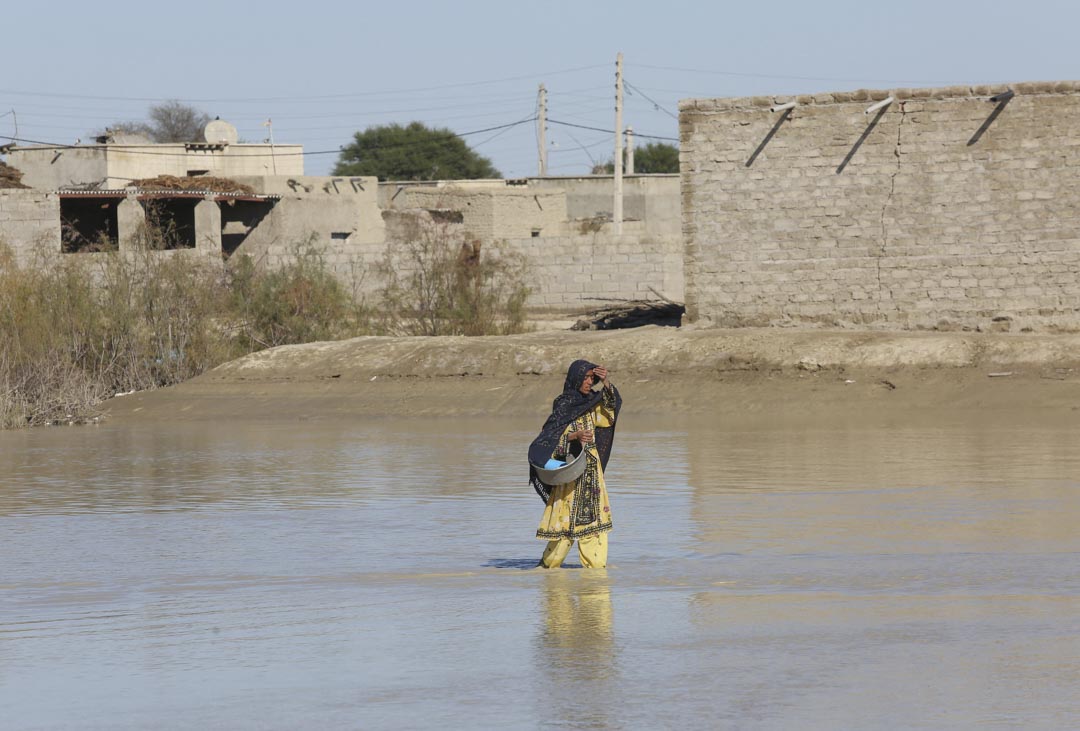
Environmental degradation, driven by climate change, poor water management and interstate disputes, particularly with Afghanistan over the Hirmand/Helmand River’s flow into Iran, poses an escalating concern. Droughts, dust storms and floods have devastated local agriculture and worsened living conditions. Tehran’s responses have focused on finding alternative sources of water in an arid region. Without significant investment in water management, infrastructure and sustainable practices, environmental pressures will deepen socio-economic hardship and could catalyse further unrest.
Tehran needs a multi-pronged strategy to stabilise Baluchestan. Priorities should include expanding Baluch representation in governance and engaging with local leaders to give them a stronger political voice; investing in infrastructure, education and job creation to promote economic development while curbing reliance on illicit trade; modernising water management, redoubling efforts to resolve water disputes with Afghanistan and improving disaster preparedness in order to improve environmental resilience; and moving away from a preponderantly coercive approach to militancy and toward one that recognises the need to address underlying socio-political drivers of violence, including through transparent accountability for the “bloody Friday” crackdown.
These steps require resources and political will at a time when Tehran is grappling with severe economic and geopolitical pressures, including frictions with Israel and the U.S. and the prospect of a “snapback” of UN sanctions. Yet neglecting Baluchestan’s challenges will only heighten the risk of instability, at the local level and perhaps at the national and Middle Eastern levels as well. Addressing the province’s grievances ought to be a priority for Tehran – all the more so because the region’s plight is not unique. Indeed, it reflects national trends – economic decline, strained infrastructure, environmental stress and a deepening gap between state and society. Progress in Baluchestan would signal that Tehran is serious about tackling these systemic challenges. Conversely, failure to act risks leaving the region’s discontent to fester, with consequences that could reverberate both inside and beyond its boundaries.
Zahedan/Washington/Brussels, 19 August 2025
For several months starting in mid-September 2022, protests rocked Iran. They were sparked by the death of Mahsa (Jhina) Amini, a young Kurdish woman who had been detained by the government’s “morality police” (Gasht-e Ershad). Held in Tehran, Amini died in police custody on 16 September 2022.[1] The government reacted to the wave of demonstrations with a violent crackdown that resulted in an estimated 551 fatalities, including 49 women and 68 children. Nearly one in five of these people, or 104 to be precise, were killed in Zahedan, capital of Sistan and Baluchestan province on 30 September, a day that was subsequently dubbed “bloody Friday”.[2]
Tensions in the Baluchestan region – the southern part of the province of Sistan and Baluchestan – had been building prior to Amini’s death, and protests by the Baluch persisted well into 2023 even as they ebbed elsewhere. The unrest reflected deep-seated political and socio-economic discontent. While the effects of government mismanagement are felt throughout the country, Baluchestan’s inhabitants, like other ethnic and religious minorities, have long felt discriminated against by the country’s ruling elite. As is the case with most parts of the periphery in Iran’s highly centralised system of governance, the region tends to be neglected as a matter of state policy. While the state’s repression and the passage of time eventually brought the demonstrations in Baluchestan to an end, the grievances that animated them remain unaddressed.
Located in the country’s south east, Baluchestan makes up almost 90 per cent of Sistan and Baluchestan’s territory, and the Baluch people constitute roughly tw0 thirds of its population. The province, geographically among Iran’s largest, is bounded by the Gulf of Oman to the south, with its eastern reaches running along the entirety of the Iran-Pakistan frontier and a small stretch of the border with Afghanistan. Its size and location astride an international waterway give it great geopolitical and economic importance.[3]
In addition to their Baluch ethnicity, which makes them a minority in a mostly Persian state, the vast majority of Baluchestan’s population are Sunni, which makes them a religious minority as well.[4] By contrast, the province’s Sistani population, who live in the north, share Shiite Muslim practices and the Persian language with the country’s majority and the state apparatus. Not coincidentally, Sistanis have historically enjoyed greater access to political and government opportunities compared to the Baluch, who have faced numerous obstacles stemming from what they regard as structural discrimination.[5]
[1] See Crisis Group Statement, “Iranian Leaders Should Call Off Their Campaign of Repression”, 23 September 2022.
[2] “Report of the independent international fact-finding mission on the Islamic Republic of Iran”, UN Human Rights Council, A/HRC/55/67, 2 February 2024; and “Iran: Security Forces Violently Repress Anniversary Protest”, Human Rights Watch, 22 November 2023.
[3] Sistan and Baluchestan covers over 182,000 sq km. With a population of approximately 3.1 million as of March 2023, it ranks as the tenth most populous province in the country. “Iran Statistical Yearbook 2022-2023 (1401)”, Statistical Centre of Iran, pp. 55 and 129 [Persian].
[4] “A Descriptive and Analytical Report on the Cultural and Artistic Landscape of Sistan and Balochistan Province”, Iran’s Ministry of Culture and Islamic Guidance, Summer 2021 [Persian].
[5] “Situation of human rights in the Islamic Republic of Iran”, UN Human Rights Council, A/HRC/58/62, 12 March 2025; and Mohammadreza Hafeznia, Seyed Salman Hosseini and Zahra Ahmadipour, “Government Policies and Inter-ethnic Relations – Case Study: Baluch and Sistani Ethnic Groups”, Spatial Planning and Development, vol. 17, no. 2 (2011) [Persian].
The Baluch […] feel isolated and aggrieved, expressing their discontent through sporadic protests and (at the edges of society) separatist violence.
Successive administrations in Tehran have touted the region’s potential as a hub for commerce and industry, while pledging to redress its longstanding poverty, underdevelopment and insecurity.[1] More often than not, however, these promises have proven hollow. The government of President Masoud Pezeshkian, who campaigned on addressing the grievances of the country’s ethnic and religious minorities and improving conditions in its peripheral regions, appointed the first Sunni Baluch provincial governor in over four decades. The president also made Zahedan the first place in the country he visited following his inauguration in July 2024.[2] But follow-through on these overtures has been lacking. Meanwhile, the Baluch continue to feel isolated and aggrieved, expressing their discontent through sporadic protests and (at the edges of society) separatist violence.
This report delves into the immediate and long-term causes of discontent in Baluchestan. It complements an earlier study of Iran’s Khuzestan province.[3] It is based on more than 50 interviews since 2023 with experts, activists and residents of Baluchestan, former and current Iranian officials, and foreign diplomats. Women and ethnic minorities were represented among all the above categories of interlocutors – in numbers roughly proportional to their representation in each interviewee cohort. Official sources contain data on both the region of Baluchestan and on the province of Sistan and Baluchestan. This report cites regional-level data where that is available, relying in its absence on provincial-level data as an imperfect proxy. But the interviews and other field research focus on the Baluchestan region.
[1] See for example, “Sistan and Balochistan to reap outcomes of Makran development”, Mehr News, 28 February 2017; “Development, Resolution of Sistan and Baluchistan Issues Serious Issue [sic] by Gov’t”, President of the Islamic Republic of Iran, 18 May 2023; and “Pezeshkian highlights focus on Sistan and Baluchistan’s development”, Tehran Times, 28 October 2024.
[2] On Pezeshkian’s presidential campaign, see Crisis Group Middle East Report N°245, Man on a Wire: A Way Forward for Iran’s New President, 30 July 2024. In addition to Mansour Bijar, who was appointed governor in late October 2024, the Pezeshkian government also tapped a Sunni Kurd to oversee the north-western province of Kordestan and an Arab to steward Khuzestan province, which is home to a sizeable Arab population.
[3] Crisis Group Middle East Report N°241, Iran’s Khuzestan: Thirst and Turmoil, 21 August 2023.
The particular explosiveness of the unrest that occurred in Zahedan and elsewhere in Baluchestan in late 2022 owed to the convergence of several factors.[1] Even before Mahsa Amini’s death infuriated the nation, tensions were running high over reports that a senior law enforcement officer in the port city of Chabahar had sexually assaulted a teenage Baluch girl.[2] But after Amini’s death, the anger among the Baluch rapidly increased. On 30 September, Molavi Abdolhamid Esmailzahi, the Sunni Baluch imam of Zahedan’s Makki Mosque, used his pulpit to call upon the authorities to investigate the Chabahar incident swiftly, fairly and transparently to calm popular outrage over the lack of accountability.[3]
But that outrage was already building to dangerous levels. As the prominent cleric ended Friday prayers on 30 September, Baluch worshippers gathered in front of a nearby police station to stage a protest. Clashes with police ensued, soon spreading to adjacent areas, including the mosque and the Great Mosalla prayer hall nearby. According to UN fact finders, more than 100 people were killed and 350 injured.[4] Iranian authorities, who confirmed only 35 fatalities, acknowledged that state forces were responsible for some of the killings, but claimed that other armed elements had killed a number of civilians as well as five state personnel.[5]
[1] By one estimate, Sistan and Baluchestan saw just 1 per cent of the protests in the wake of Amini’s death, but nearly one third of the fatalities. “Anti-government demonstrations in Iran: A long-term challenge for the Islamic Republic”, ACLED, 12 April 2023.
[2] A colonel allegedly sexually assaulted a fifteen-year-old girl under the pretext of interrogating her in connection with her brother’s arrest in a murder case. The girl’s family decided to go public with a complaint. “The launch of the fact-finding committee”, Hammihan, 12 October 2022 [Persian]. See also “Iran police chief gets 15 months in jail amid rape claim”, Agence France Presse, 17 February 2023.
[3] “People have the right to protest peacefully”, Shaikh Abdolhamid, 30 September 2022 [Persian].
[4] A/HRC/55/67, op. cit. See also “‘It was a massacre’: How security forces cracked down in southeastern Iran”, The New York Times, 14 October 2022.
[5] “The number of Basij and Revolutionary Guards personnel killed in Zahedan reached five”, Islamic Republic News Agency, 2 October 2022 [Persian]; “Details of Sistan and Baluchestan security council’s statement regarding 30 September incident”, Mehr News, 28 October 2022 [Persian]; and “35 people killed in 30 September incident; 24 of them were innocent”, Etemad Online, 10 December 2022 [Persian]. While the protests in Zahedan were particularly intense, unrest also erupted in towns throughout the province, with reports of fatalities among demonstrators. Crisis Group interviews, residents, Khash, 24 August 2023. See also “Iran: Urgent International Action Needed to Stop Mass Killings of Balochi Protesters”, Amnesty International, 10 November 2022.
In Baluchestan, [the “women, life, freedom”] demonstrations became an opportunity to highlight the region’s grievances and its demands of Tehran.
As more Iranians rose up in the wake of Amini’s death, provincial and national dynamics fed one another. A wave of “women, life, freedom” protests swept the country. In Baluchestan, these demonstrations became an opportunity to highlight the region’s grievances and its demands of Tehran – namely that it get more resources and have a bigger say in its own governance. Meanwhile, slogans like “Zahedan, light of Iran” were amplified nationwide in support of the protests in Baluchestan.[1] Often consigned to the figurative margins of Iranian politics, the region and its plight moved front and centre, with Baluch taking to the streets every weekend for more than a year after “bloody Friday”.[2]
For the government, the unrest in Baluchestan posed a particular dilemma. In Molavi Abdolhamid it faced an influential critic whose profile grew as he denounced Tehran’s response to the protests and its other failures.[3] “Hold a referendum and meet people’s demands”, Abdolhamid exhorted Tehran. “The country’s current policies have reached a dead end”.[4] These words were not well received by the Islamic Revolutionary Guard Corps – the regime’s iron fist at home and the tip of its spear abroad – which issued an ominous threat. In a statement, it warned Abdolhamid that “encouraging and agitating youths against the sacred Islamic Republic of Iran may cost you dearly”.[5] For its part, the hardline media lambasted the cleric for pouring “gasoline on the enemy’s seditious fires”.[6]
The government took a number of steps aimed at calming the waters. In late 2022, Supreme Leader Ali Khamenei dispatched a delegation to speak with Baluchestan elites. The government also offered compensation to the families of those killed and dismissed or sentenced to prison some of the local officers who had been involved in suppressing the protests.[7]
None of these initiatives, however, seems to have diminished popular indignation at the crackdown. Abdolhamid criticised the government’s envoys for conveying what he described as threats instead of condemning the crackdown and consoling its victims.[8] The imam’s rising profile afforded him slight, precarious leeway to challenge the state; likely for fear of further turmoil, the government did not detain Abdolhamid but instead worked to “discredit” him.[9]
Baluchestan remained a flashpoint for protest and government crackdowns for more than a year after “bloody Friday”.[10] But under President Pezeshkian, who took office on 28 July 2024, the government has sought to apply a softer touch. The president, who is himself from Iran’s Azeri minority and had campaigned on minority rights, engaged directly with Abdolhamid when he visited Zahedan on his first provincial trip. He framed the visit around the theme of “delivering justice”.[11] Abdolhamid publicly thanked Pezeshkian for his efforts to help Iran’s ethnic and religious minorities, while urging the government to address the province’s severe underdevelopment.[12]
Still, the gap between state and society remains wide in Baluchestan. It is a rift that is familiar in much of Iran but perhaps runs deeper in this region, with memories of “bloody Friday” still raw. It is hardly out of the question that the underlying grievances will create the conditions for another pulse of anti-state violence.
[1] “Voice of America Farsi: Protesters in Tehran: ‘Zahedan, light of Iran’”, video, YouTube, 9 November 2022. Khodanour Lajaei, a young Sunni Baluch man killed on “bloody Friday”, became a household name after a photograph of him tied to a pole – apparently being tortured – during a prior arrest went viral following his death. The image turned him into a powerful symbol of the oppression faced not only by the Baluch but also by Iranian protesters in general. “Khodanoor Lajaei: Icon for a revolution”, Global Voices, 2 December 2022. In Zahedan, as elsewhere in Iran, the government disrupted internet access during the protests. See “Internet disrupted in Iran amid protests over death of Mahsa Amini”, Netblocks, 19 September 2022. Even so, it struggled to contain online activism.
[2] A Zahedan-based scholar remarked, “Being recognised at the national level during the 2022 protests gave people here the courage to continue demonstrating and demanding their fundamental rights”. Crisis Group interview, Zahedan, December 2024. See also “Iran cities strike in solidarity with Zahedan dead”, Agence France Presse, 9 November 2022.
[3] “A Sunni cleric in Iran inspires protesters, challenges the government”, Washington Post, 2 December 2022. A Zahedan resident contended that Abdolhamid had played a moderating role in the protests. “If the Baluch did not take up arms for revenge, it is because of him”. Crisis Group interview, Zahedan, January 2023.
[4] “Iran’s Sunni leader calls for a referendum amid nationwide protests”, Shaikh Abdolhamid, 5 November 2022.
[5] Quoted in “Tens of thousands march in Berlin in support of Iran protests”, Reuters, 24 October 2022.
[6] For an example of statements in hardline media, see “A strange push to support the plan for unrest in Zahedan”, Kayhan, 9 November 2022 [Persian].
[7] A relative of a dead protester said, “Even if a family has accepted compensation, their right to seek justice and hold the perpetrators accountable remains. We demand fair and just punishment for those responsible”. Crisis Group interview, Zahedan, August 2023. See also “Leader’s envoy meets with Zahedan Friday prayer imam”, Mehr News, 13 November 2022; “We negotiate and interact, but don’t compromise”, Shaikh Abdolhamid, 19 November 2022; “‘Bloody Friday’ of Zahedan – Sistan and Baluchestan judiciary chief: Offending officers sentenced to ten years in prison instead of retribution”, BBC Persian, 12 January 2025 [Persian].
[9] A former provincial official asserted, “‘Bloody Friday’ and Abdolhamid’s positions have brought him the support of even his local critics. … If the government eliminates him, whoever replaces him may be more extreme”. Crisis Group telephone interview, January 2023. See also “Leaked document says Iranian leadership is seeking to discredit Sunni cleric”, RFE/RL, 1 December 2021.
[10] “Iran: New Wave of Brutal Attacks against Balochi Protesters and Worshippers”, Amnesty International, 26 October 2023.
[11] “Eliminating injustice, deprivation in Sistan-and-Baluchestan province ‘top priority’ of government, Pezeshkian says”, President of the Islamic Republic of Iran, 21 November 2024; “Sistan and Baluchestan held in Iran’s arms”, Shargh, 23 November 2024 [Persian]; and “For the sake of the people and the country’s condition, we must engage with the world”, Shaikh Abdolhamid, 25 November 2024.
[12] “Molavi Abdolhamid’s remarks during Pezeshkian’s visit”, Khabar Online, 21 November 2024 [Persian].
The 2022-2023 unrest in Baluchestan reflected years of accumulated discontent rooted in economic deprivation and socio-political exclusion. Sistan and Baluchestan remains Iran’s poorest province. Its chronic underdevelopment compounds a sense among the Baluch that they are discriminated against as a double minority. Adding to these pressures is a deepening environmental crisis, particularly acute water scarcity. Water shortages, which have repeatedly triggered protests in other parts of Iran, risk inflaming tensions in Baluchestan.
Iranian authorities have long been aware of the challenges facing Sistan and Baluchestan, but their sporadic attempts at remedies have made little headway.[1] Supreme Leader Khamenei – who, prior to the 1979 revolution, had spent time in internal exile in Baluchestan for his criticisms of the Shah’s government – has repeatedly emphasised the need for government support for the area. His 2003 visit to the province, during which he described it as “the key to the development of eastern Iran”, spurred the government to approve several large-scale infrastructure projects and other investments there.[2] Yet even Khamenei has acknowledged that the results have been meagre, lamenting in a speech two decades later: “Had [past] administrations implemented those plans, the province would look completely different today. There was negligence”.[3]
Sistan and Baluchestan is part of a disconcerting bigger picture. Decision-makers in Tehran continue to neglect economic development in far-flung provinces, instead training their attention on the capital and other industrial hubs.[4]Despite occasional government efforts to reduce centralisation – through measures such as granting the provincial governor of Sistan and Baluchestan enhanced authority and allocating the province additional funds – the core-periphery model has remained largely intact.[5]
There are other problems, too. Geographical isolation poses hurdles to every aspect of governance. Sistan and Baluchestan is situated amid vast deserts, remote from the rest of the country.[6] Development projects must be tailored to its expansive size, low population density and harsh climate. Doing so demands significant financial resources, technical expertise and inter-agency coordination.[7] On top of these structural and managerial issues, international sanctions continue to hinder efforts to stimulate the local economy.[8]
[1] In the early days of the 1979 revolution, Molavi Abdolaziz Mollazadeh, a prominent Sunni Baluch cleric, met with Ayatollah Ruhollah Khomeini to pledge his community’s support while urging the new government to address the province’s longstanding deprivation. “We, the people of Baluchestan, have always been left behind, constantly marginalised and subjected to exploitation. Nothing has been done [for us]. In education, health care, agriculture – every aspect of life – we remain underdeveloped. Therefore, my humble request … is that special attention be given to Baluchestan”. Following this exchange, Khomeini directed Khamenei – then a member of the Revolutionary Council – to travel to the province and report back on its residents’ expectations. “Speech to the clerics of Sistan and Baluchestan: Building Iran through unity”, Imam Khomeini, 25 February 1979 [Persian]; and “Decree to Ali Khamenei for addressing the issues of the people of Sistan and Balochistan”, Imam Khomeini, 29 March 1979 [Persian].
[2] These projects focused on a range of issues, including investing in the province’s transit potential, improving access to essential services such as electricity and health care, combating smuggling, strengthening border security, redressing efforts to sow Shiite-Sunni division and tackling drought. “What were the 2003 plans the Supreme Leader referenced regarding Sistan and Baluchestan?”, Iranian Students’ News Agency, 11 September 2023 [Persian].
[3] “Meeting with thousands of people from Sistan and Baluchestan and South Khorasan”, Ayatollah Ali Khamenei, 11 September 2023 [Persian].
[4] The centre-periphery gap creates a ring of deprivation in western, southern and especially south-eastern Iran. A 2021-2022 study by the Labour and Social Welfare Ministry, which used a combination of indices, including poverty and household income and expenditure, confirmed significant regional disparities. While central provinces like Tehran, Alborz and Semnan are among the least deprived, border provinces, some with a considerable ethnic minority population, fare poorly. Sistan and Baluchestan is the most deprived of the country’s 31 provinces. “Poverty Monitoring in 2021-2022 (1400)”, Iranian Labour and Social Welfare Ministry, Autumn 2022 [Persian]; and “What are the most deprived provinces of Iran?”, Farday-e-Eghtesad, 9 January 2023 [Persian]. For more on the core-periphery gap in Iran, see Nasrin Kazemi and Jamshid Amini, “Deprivation Spatial Concentration in a Developing Country: Evidence from Iran”, Regional Science Policy and Practice, vol. 16, no. 2 (2024); MirNajaf Mousavi et al., “Mitigating Development Barriers and Addressing Disparities in Border Cities of Iran: A Comprehensive Analysis of Border Provinces and Influential Factors”, GeoJournal, vol. 89 (2024); and Mirghasem Banihashemi, “Models of Building the Centre and Trends of Regional Development (the Case Study of Iran)”, Journal of Strategic Studies, vol. 23, no. 88 (2020) [Persian].
[5] A former Iranian security official said, “A special governor may temporarily relieve Sistan and Baluchestan’s deep-rooted problems, but this would still fall short of fixing the longstanding mismanagement plaguing the province”. Crisis Group interview, Tehran, February 2024. See also“Mohammad Karami, governor of Sistan and Baluchestan, appointed as President Raisi’s special envoy for executive affairs in the province”, Dolat, 17 September 2023 [Persian]. Sistan and Baluchestan has received the highest share of poverty alleviation funds in the national budget in recent years. “Review of Part Two of the 2025 National Budget Bill (3): Allocations for Deprivation Alleviation”, Iranian Parliament Research Centre, 9 February 2025 [Persian]; “A Top-down Approach to Two Border Provinces in 2025 Budget”, EcoIran, 16 February 2025 [Persian]; and “An Analysis of Deprivation Indicators and Underdeveloped Areas in National Legislation”, Iranian Parliament Research Centre, 12 June 2023 [Persian].
[6] For example, it was only in 2009 that the government inaugurated a railway linking Zahedan, the province’s capital, to the national network. Full operation was then delayed for several years due to technical challenges: the railway passes through harsh desert terrain, making maintenance costly. Sandstorms cause occasional derailments. The province’s southern areas remain unconnected to the national railway. “Kerman-Zahedan railway re-inaugurated”, BBC Persian, 25 March 2011 [Persian]; and “The troublesome 70km of rail: A concern for passengers and authorities”, Islamic Republic News Agency, 1 December 2018 [Persian].
[7] Though the government has succeeded in reducing deprivation in various regions over the past four decades, the progress has not been evenly distributed or aligned with the specific needs of each area. Poor planning, weak coordination and outdated data are some of the reasons for the government’s failure to effectively combat deprivation, a reality acknowledged even in government reports. For example, the 2021 National Spatial Planning document promotes balanced development, but the country’s energy policies stress economic efficiency, making investment in sparsely populated areas like Sistan and Baluchestan less likely. Consider also how the government put construction of the Chabahar airport – a key development project – on hold due to opposition from the armed forces. See “Review of Part Two of the 2025 National Budget Bill (3): Allocations for Deprivation Alleviation”, op. cit.; “Regional and Spatial Planning Studies in Iran (11): A Review and Critique of the National Spatial Planning Document with Recommendations for the Seventh Development Plan”, Iranian Parliament Research Centre, 6 August 2023 [Persian]; and “Defence minister opposes new airport in Chabahar”, Tasnim News Agency, 3 September 2024 [Persian].
[8] In response to international sanctions, the state puts a priority on short-term, survival-oriented projects over long-term, sustainable development goals. “Iran Under Sanctions”, Rethinking Iran, Johns Hopkins University School of Advanced International Studies, 2020.
The [Sistan and Baluchestan] province consistently ranks at or near the bottom of national development indices.
For these and other reasons, the province consistently ranks at or near the bottom of national development indices. Poverty and unemployment are rampant: Sistan and Baluchestan is by most metrics the most deprived province in Iran, with twelve of its 26 counties ranking among the twenty poorest nationwide.[1] It has one of the highest unemployment rates in the country and one of the lowest labour force participation rates.[2] Roughly 60 per cent of residents are under the age of 30, and more than 30 per cent of the region’s youth (people aged fifteen to 24) have no job.[3] Household incomes are among the lowest in the country, with most of the earnings spent on basic necessities.[4]
On top of these challenges, thousands of Baluch in Iran are undocumented.[5] Many of those without identification papers belong to families that have been living in the region for generations. They never obtained such documents for reasons including the area’s remoteness, poverty and lack of education (which makes navigating the complex bureaucracy yet more difficult). Others are young men avoiding military service or people who cannot prove that their father was Iranian (given that nationality is patrilineal in Iran).[6] Without ID cards, people are denied basic services – including school enrolment, health care and access to banking.[7]
The province’s lack of development is reflected in the lowest urbanisation rate in the country, and basic infrastructure and essential services are especially lacking in rural areas. Housing conditions in villages are dire: many homes are made from mud or palm thatch, making them highly vulnerable to natural disasters.[8]Nearly 60 per cent of dwellings, according to the Iranian Parliament Research Centre, fail to meet at least one of four housing standards – that is, access to clean water and proper sanitation, adequate living space and climate resilience.[9] Nearly 40 per cent of the province’s villages still lack water supply facilities, forcing residents to rely on unsafe water sources.[10] Wastewater management is nearly non-existent.
While more than half of the country’s urban population has access to sewage infrastructure, the figure drops to just a quarter in Sistan and Baluchestan, which ranks fourth from the bottom nationally.[11] The lack of adequate sanitation has led to severe water contamination, exacerbating health crises and accelerating environmental degradation.[12] The situation is not much better in the province’s cities: 40 per cent of urban housing is located in slums and shantytowns.[13]
Access to education and health care is also subpar. The province has the highest illiteracy and school dropout rates in Iran.[14] Some children either never enrol in school or quit early to help support their families.[15] Girls may be forced to leave home in early marriages to ease the financial burden on their households – child marriage is more prevalent than in most other provinces.[16] Health care is also in a bad state: the province consistently ranks among the lowest in the country in access to hospitals, clinics and pharmacies.[17]
[1] Around 30 per cent of households in Sistan and Baluchestan live in severe deprivation, the highest rate in the country. “Multidimensional Poverty (2): How the National Multidimensional Poverty Index is Calculated”, Iranian Parliament Research Centre, September 2024 [Persian]. For alternative institutional approaches to defining deprivation rankings, see “Poverty Monitoring in 2021-2022 (1400)”, op. cit. Sistan and Baluchestan has the highest level of income inequality in its urban areas, as measured by the Gini coefficient. “Income Distribution in Iran 2023-2024 (1402)”, Statistical Centre of Iran, 7 October 2024 [Persian].
[2] In 2023-2024, Sistan and Baluchestan recorded an unemployment rate of 12.4 per cent, the highest among the country’s provinces, compared to the national average of 8.1 per cent. The province also had the third lowest labour force participation rate, standing at 35.2 per cent, significantly below the national average of 41.3 per cent. “Summary of Findings from the 2023-2024 (1402) Labour Force Survey”, Statistical Centre of Iran [Persian]. In 2024-2025, the province’s unemployment rate ranked second in the country at 12.2 per cent. “Unemployment rate of provinces in 2024-2025”, Shargh, 8 June 2025 [Persian]. These statistics measure joblessness and labour force participation among both men and women. The Iranian labour force is composed mostly of men, however, meaning the percentages of men working or out of work and looking for it are higher than the same percentages among women.
[3] Nearly one in five of the province’s residents is between the ages of fifteen to 24, the highest youth population ratio in the country. In 2023-2024, the youth unemployment rate (ages fifteen to 24) was 30.6 per cent, ranking fifth highest in the country. “Sistan and Baluchestan: The country’s youngest province”, Iran’s Metropolises News Agency, 23 December 2024 [Persian]; and “The Economic, Social and Cultural Status of the Provinces between March 2019 and March 2024 (1398-1402)”, Statistical Centre of Iran, p. 65 and 86 [Persian].
[4] In 2023-2024, it had the lowest average rural household income and the fifth lowest average urban household income in the country. “The Economic, Social and Cultural Status of the Provinces between March 2019 and March 2024 (1398-1402)”, op. cit., pp. 427-428.
[5] There is no official data, but estimates by Baluch experts and rights groups put the figure as high as 100,000. “The slow death of the undocumented in Baluchestan”, Iranian Labour News Agency, 8 January 2025 [Persian].
[6] Crisis Group telephone interview, Baluch sociologist, November 2023. See also “The forgotten ones”, Hammihan, 21 January 2024 [Persian].
[7] The government’s restrictive approach to issuing IDs, particularly in this border province with high numbers of Afghan and Pakistani migrants, has worsened the problem. Government officials, including Supreme Leader Khamenei’s representative, have acknowledged as much. They have also warned that restrictions could push undocumented individuals into illicit activity and even increase the risk of their recruitment by separatist or militant groups. “The slow death of the undocumented in Baluchestan”, op. cit.; and “Zahedan cleric raises alarm over the plight of individuals with no ID in Sistan and Baluchestan”, Tasnim News Agency, 1 November 2023 [Persian].
[8] Crisis Group telephone interview, Baluch sociologist, November 2023.
[9] Around 30 per cent of households in the province – the highest rate in the country – lack at least two key housing standards, while the national average stands at only 2 per cent. These figures underscore the critical need for targeted housing policies to address the province’s disparities in living conditions. The province also lags far behind the rest of the country in access to clean water. While only 1 per cent of Iran’s total population lacks access to piped drinking water, this figure rises to 9 per cent in Sistan and Baluchestan, the second highest rate in the country. “Monitoring Poverty Dimensions in 2023-2014 (1402) (1): Housing Poverty”, Iranian Parliament Research Centre, October 2024 [Persian].
[10] “Sistan and Baluchestan’s villages need 27 trillion tomans in funding to reach 96 per cent sustainable access to water”, Iranian Students’ News Agency, 19 October 2024 [Persian].
[11] “Iran Statistical Yearbook 2022-2023 (1401)”, op. cit., p. 116.
[12] Crisis Group interviews, Baluch residents and social scientists, Zahedan, 2023-2024.
[13] “Monitoring Poverty Dimensions in 2023-2024 (1402) (1): Housing Poverty”, op. cit.; and “Iran Statistical Yearbook 2022-2023 (1401)”, op. cit., pp. 115 and 116.
[14] The literacy rate in Iran stands at 87.6 per cent, but in Sistan and Baluchestan, it drops to 76 per cent, the lowest in the country. The situation is even more alarming among women. While 84.2 per cent of women nationwide are literate, in this province that figure falls to just 70.8 per cent. “Iran Statistical Yearbook 2022-2023 (1401)”, op. cit., p. 609.The province also has the country’s lowest school enrolment rate, meaning that fewer children and teenagers are at the right age for their grade than in other regions. It also has the highest school dropout rates. “The Economic, Social and Cultural Status of the Provinces between March 2019 and March 2024 (1398-1402)”, op. cit., pp. 343-351.
[15] Crisis Group telephone interview, Baluch economist, November 2023.
[16] Crisis Group interview, Baluch sociologist, Zahedan, November 2023. Reliable, up-to-date data on child marriage in Sistan and Baluchestan are scarce, partly because the government does not regularly release such numbers and partly because many marriages in the province go unregistered due to lack of formal documentation. According to a local official in 2019, the province ranked third in the country for child marriage prevalence. In addition to economic hardship, cultural traditions play a role in sustaining the practice. “Sistan and Baluchestan ranks third in child marriage”, Islamic Republic News Agency, 1 August 2019 [Persian].
[17] “The Economic, Social and Cultural Status of the Provinces between March 2019 and March 2024 (1398-1402)”, op. cit., pp. 366-380; and “When early death haunts Sistan and Baluchestan”, Etemad, 9 June 2024 [Persian].
Smuggling, whether of fuel, drugs or other goods, has become a primary means of economic survival for many Baluch.
Poverty and underdevelopment in Sistan and Baluchestan have contributed to the prevalence of illicit cross-border trade. Smuggling, whether of fuel, drugs or other goods, has become a primary means of economic survival for many Baluch. As a former security official put it, “The name of this province has become synonymous with smuggling”.[1]
Fuel, which is heavily subsidised in Iran, is particularly lucrative to smuggle – to the extent that a Baluch sociologist described this black-market trade as the province’s “dominant economic activity”.[2] Officials estimate that anywhere between seven and eleven million litres of gasoline and diesel fuel pass across borders in Sistan and Baluchestan each day – much of it into Pakistan or Afghanistan.[3] Fuel smuggling is so common that the people involved are referred to locally as “fuel porters” (sukht-bar) rather than “smugglers” (ghachaghchi). The term highlights the difference in local eyes between an illicit livelihood pursued out of economic necessity and a crime.[4]
The “fuel porters” face significant dangers. They typically transport fuel in pickup trucks, travelling long and hazardous routes to reach their destinations. Iranian, Pakistani and Afghan border guards often shoot at them; they also risk being injured or killed in road accidents.[5]
The government in Tehran has tried to partially legalise fuel smuggling, hoping that letting residents of border provinces supplement their meagre incomes will discourage them from migrating elsewhere in the country. A former provincial official said the state stepped up these efforts in the 2010s, when the economy came under increasing strain from water scarcity that undermined agriculture as well as international sanctions.[6] Since then, the government has introduced several fuel quota schemes, always based on the same premise: authorising people living within 20km of a border to sell a certain amount of fuel on the other side.[7]
But while fuel quota programs are popular in areas facing high unemployment, they are limited in scope.[8]Moreover, lack of transparency has led to widespread abuse and corruption, including falsification of records and capture of quotas by powerful intermediaries.[9] The former provincial official said:
Many of those who receive fuel quotas as “border residents” do not actually live near the border. Some are wealthy truck owners who profit by selling their surplus fuel. The primary beneficiaries are often individuals with close ties to the authorities. Others are government-affiliated institutions that generate revenue by selling fuel, sometimes even bringing it in from neighbouring provinces. Meanwhile, the actual fuel porters earn the least and are the ones most exposed to danger.[10]
For these and other reasons, the fuel quotas have not worked as intended. They have not created sustainable legal job opportunities.[11] They have proven ineffective in tamping down illicit activity: according to a local official, only 10 per cent of fuel smuggling has been channelled through the government-designed schemes.[12] Large-scale smuggling by organised networks persists.[13] Lastly, the programs risk reinforcing harmful stereotypes of Baluch as inveterate bootleggers.
Trafficking in narcotics, particularly synthetic drugs, presents another challenge. The province’s proximity to drug production hubs in Afghanistan has made it a prime smuggling corridor. The drug trade has drawn in more and more local people, as traffickers hide shipments in urban residential areas – and use residents themselves as couriers.[14] Poverty, underdevelopment and, in some cases, alleged official complicity have fuelled the practice.[15] According to a former interior ministry official, “The province’s association with drug trafficking is a major deterrent to attracting investors”.[16]
Smuggling of other commodities is also widespread. The province’s lengthy land and maritime borders, coupled with inefficiency and corruption in customs, have turned it into a funnel for contraband. According to official statistics, at least one quarter of the smuggled goods entering Iran get in via loopholes in customs enforcement.[17] The rest comes in at “invisible docks” or through land crossings where there is no customs oversight.[18] These sites, some reportedly under the control of state and military-affiliated entities, have been publicly acknowledged by officials at the highest levels, including the presidency.[19] Their existence highlights not only systemic corruption but also the challenges inherent in enforcing anti-smuggling measures in a region where illicit trade has become entrenched.
[1] Crisis Group interview, Tehran, March 2024.
[2] Crisis Group interview, Tehran, November 2023.
[3] Iran has some of the highest energy subsidies in the world. Gasoline is priced at less than $0.03 per litre, placing it alongside Libya and Venezuela among the three countries with the lowest fuel prices. “Gasoline Prices”, Global Petrol Prices, 7 April 2025. A former provincial security official said, “As long as fuel prices are lower in our country, fuel smuggling will continue”. Crisis Group interview, Tehran, January 2024. See also “Daily smuggling of 7 to 11 million litres of fuel in Sistan and Baluchestan”, Iranian Students’ News Agency, 5 November 2023 [Persian]. According to the Pakistan Petroleum Dealers Association, up to 35 per cent of diesel sold in Pakistan is smuggled into the country from Iran. Its chairman said, “In the past, smuggled fuel was restricted to just Balochistan, but it has now spread all over”. Quoted in “More Iranian fuel being smuggled to Pakistan, petroleum dealers say”, Reuters, 9 May 2023.
[4] “We are not smugglers; we are fuel porters”, Etemad, 9 December 2019 [Persian].
[5] There is no government data on the number of deaths and injuries, but the UN Special Rapporteur on Human Rights in Iran received reports that between January and November 2024, Iranian border guards killed 216 Baluch fuel porters and wounded 129 others. Haalvash, a Baluch human rights organisation based outside Iran, documented the deaths of 366 fuel porters under fire or in highway accidents between March 2023 and March 2024. Similarly, an investigation by the Etemad newspaper indicated that between March 2022 and March 2023, 170 fuel-laden vehicles exploded in accidents, killing 168 fuel porters in just two of the province’s counties, Iranshahr and Sarbaz. “Situation of human rights in the Islamic Republic of Iran”, op. cit.; “Annual Report 2023–2024 (1402)”, Haalvash, June 2024 [Persian]; and “A harrowing story from Iranshahr and its fuel porters”, Etemad, 15 June 2023 [Persian].
[6] Crisis Group interview, Zahedan, October 2023.
[7] The latest scheme, named the “Razagh plan”, was introduced by the Revolutionary Guards in 2020. The word razagh means “provider” or “sustainer”, highlighting that the program aims to support the livelihoods of people living along the country’s borders. “Razagh: A fuel management scheme for border residents of Sistan and Baluchestan”, IRIB News Agency, 24 February 2021 [Persian].
[8] During his visit to Sistan and Baluchestan, the minister of industry, mining and trade said, “Razagh was the unanimous demand of the people, and I assured them I would convey it to the president”. “Atabak: The people of Sistan and Baluchestan want the ‘Razagh plan’ implemented”, Student News Network, 10 January 2025 [Persian].
[9] There is increasing demand for transparency about how the Razagh scheme will allocate revenue. “The people of Sistan still waiting for transparency regarding the Razagh scheme”, Student News Network, 6 April 2025 [Persian].
[10] Crisis Group interview, Zahedan, October 2023.
[11] The chairman of the Iran Chamber of Commerce’s energy commission argued, “Instead of investing in factories or creating opportunities for legal trade, we allow border residents to smuggle goods. … Someone who builds a cement factory in Sistan and Baluchestan is truly supporting the region, contributing to sustainable development and long-term growth. In contrast, policies that treat an entire population as smugglers by default … do more harm than good”. Quoted in “To the benefit of smugglers”, Tejarat-e Farda, 11 January 2025 [Persian]. A Baluch activist said, “Some people have left their jobs and turned to fuel smuggling, drawn by the promise of higher income with less effort. For instance, instead of struggling to cultivate crops in the face of water shortages, some farmers opt to sell their fuel rations. In one case, a teacher resigned from his position to sell fuel, earning significantly more than he did in the classroom”. Crisis Group interview, Zahedan, September 2023.
[12] “The oil minister was referring to the ‘Razagh’ scheme”, Donya-e Eghtesad, 31 December 2024 [Persian].
[13] In December 2024, President Pezeshkian ordered an investigation after learning that 20 million litres of fuel were disappearing daily from the distribution system. “Pezeshkian’s sarcastic remark on the disappearance of 20 million litres of fuel per day”, Khabar Online, 17 December 2024 [Persian].
[14] Crisis Group interview, former senior security official, Tehran, February 2024.
[15] Crisis Group interviews, Baluch activists and former provincial officials, October 2023-March 2024.
[16] Crisis Group interview, Tehran, January 2024.
[17] “Analysis of Customs-related Challenges in the Islamic Republic of Iran”, Iranian Parliament Research Centre, 2 April 2024 [Persian]. In 2020, the Iranian parliament released an investigative report outlining the methods commonly used to smuggle goods through customs. It found that smuggled goods have historically accounted for between 22 per cent and 33 per cent of total imports, yet only 1 to 8 per cent are intercepted – meaning that, on average, 95 per cent get to market. “Full text of Iranian parliament’s investigative report on smuggling”, Fars News, 12 May 2020 [Persian].
[18] In 2011, ten of the country’s some 80 “invisible docks” were in Sistan and Baluchestan. It is unknown if they are still active. “The problematic docks”, Iranian Students’ News Agency, 5 July 2011 [Persian].
[19] In 2011, then-President Mahmoud Ahmadinejad contended – sparking controversy – that government entities were smuggling goods through “illegal borders”: “This organisation, that agency, this ministry – everyone has carved out a hole somewhere along the border to bring things in and out as they please. This is wrong. No one should be above the law. … If a shipment is related to defence, security or intelligence, it can enter through legal channels – there’s no issue with that. But no ministry has the right to operate a port or border crossing outside customs supervision”. His remarks were followed by a reaction from the Revolutionary Guards commander: “Like other military institutions, the Guards has military ports under its control, but no commercial transactions take place there”. Both quoted in “IRGC responds to Ahmadinejad’s remarks: No commercial activity takes place at our docks”, Radio Farda, 3 July 2011.
Tehran has made efforts to encourage licit economic growth through infrastructure investment, but these have had limited success.
To be sure, Tehran has made efforts to encourage licit economic growth through infrastructure investment, but these have had limited success. For example, the government has sought to capitalise on Baluchestan’s location along Iran’s southern coast to turn it into a transport hub – particularly by attempting to develop Chabahar as part of a trilateral initiative involving Iran, India and Afghanistan. Launched in 2016, the project aimed to enhance Chabahar’s port facilities and rail links.[1]
The Chabahar project was announced at a hopeful moment for Tehran. It came about in the aftermath of the 2015 nuclear deal, when then-President Hassan Rouhani’s administration thought it could seize the opportunity created by sanctions relief to lift Iran’s economy out of isolation. Meanwhile, Afghanistan needed better transport links to international destinations, and India was aiming to counterbalance its rival Pakistan’s growing ties with China at Gwadar port (which sits just across the Pakistani border with Iran) and expand its influence in Afghanistan.[2]
But even before the U.S. under President Donald Trump pulled out of the nuclear deal in May 2018, initiating a “maximum pressure” campaign that brought crippling new sanctions, Western firms were hesitant to engage in the project or provide the necessary equipment. The geopolitical uncertainties were simply too big to overcome.[3] Progress in developing Chabahar has therefore remained limited – doing little to stimulate an economic revival in Baluchestan.[4]
[1] See “Agreement on the Establishment of an International Transport and Transit Corridor among the Governments of the Republic of India, the Islamic Republic of Afghanistan and the Islamic Republic of Iran [Chabahar Agreement]”, India Ministry of External Affairs, 23 May 2016; and “To sidestep Pakistan, India embraces an Iranian port”, Washington Post, 24 May 2016.
[2] Rouhani declared, “The Chabahar agreement is not only an economic achievement but also a political and regional one that develops the whole region”. Tweet by Hassan Rouhani, @HassanRouhani, president of Iran, 7:07pm, 23 May 2016.
[3] See “India’s plan to develop key Iranian port faces U.S. headwinds”, Reuters, 9 June 2017; “U.S. sanctions on Iran threaten vital Afghanistan trade project”, Reuters, 20 May 2018; and “U.S. sanctions on Iran threaten Chabahar Port”, TOLO News, 21 May 2018.
[4] India routed its inaugural shipment to Afghanistan through Chabahar in October 2017; the first India-bound Afghan cargo passed through Iran in February 2019. “India sends first wheat shipment to Afghanistan via Chabahar port”, The Economic Times, 30 October 2017; and “Afghanistan begins exports to India through Iranian port”, Voice of America, 25 February 2019. India assumed operational control of Chabahar’s Shahid Beheshti port in late 2018. “India Takes Over Operations of Part of Chabahar Port in Iran”, India Ministry of Ports, Shipping and Waterways, 7 January 2019.
Underdevelopment and poverty in Baluchestan deepen the strong sense of ethnic and sectarian discrimination in the region.[1] Baluchestan’s people feel that they have long been shunted to the sidelines of civic and political life in Iran. This sentiment, which predates the 1979 Islamic Revolution, is linked to the fact that the ethnic Baluch who make up the majority of the region’s population speak the Baluchi language and have close cultural ties to co-ethnics, who live mainly in Pakistan.[2] Their ethnic and linguistic distinctiveness has contributed to a longstanding gap between them and the Persian-speaking majority in the rest of the country.[3]
When the Islamic Revolution turned Iran into a Shiite theocracy that institutionalised religious authority within the state, the new order deepened the sense of exclusion among the predominantly Sunni Baluch, most of whom follow the Hanafi school of Islamic jurisprudence.[4] Many of their clerics, called molavis, were educated in Deobandi seminaries in Pakistan, shaping their distinct religious identity.
[1] A Baluch sociologist said, “The very state of deprivation in Baluchestan fuels a sense of discrimination, a feeling of ‘why is this province so poor and underdeveloped?’”. Crisis Group telephone interview, April 2024.
[2] The 1871 Goldsmid Line Agreement between Iran’s Qajar government and Great Britain delineated spheres of influence in Baluchestan, helping shape the present-day border between Iran and Pakistan. For background, see “Iran-Pakistan Border Dispute: An Evaluation of the Iranian Claim”, U.S. Department of State Office of Intelligence Research, 16 September 1964.
[3] Official data on the demographic composition of Iran’s population is not publicly available. Estimates widely cited by international organisations, Iranian scholars and media suggest that Baluch make up between 2-4 per cent of the population, with the majority residing in Sistan and Baluchestan. Academic studies and media reports commonly estimate that approximately 70 per cent of the province’s population adheres to Sunni Islam. “Situation of human rights in the Islamic Republic of Iran”, UN Human Rights Council, A/HRC/58/62, 12 March 2025; “Poverty and Sistan-Baluchestan: An unbroken bond”, Shargh, 1 October 2022 [Persian]; and Mohammadreza Hafeznia and Morad Kavianirad, “Ethnic Identity and National Integration: The Case of Iranian Baluch”, University of Isfahan Research Journal of Humanities, vol. 20, no. 1 (2006) [Persian].
[4] The Hanafi school is one of the four major schools of Sunni Islamic jurisprudence, known for its emphasis on reason, analogy and juristic discretion. The Deobandi movement is a reformist revivalist branch of Sunni Islam rooted in the Hanafi school, originating in 19th-century India, that emphasises traditional Islamic scholarship, strict adherence to Islamic law and personal piety.
The Baluch have long expressed frustration with their inadequate representation in provincial and national leadership bodies.
Like other ethnic-religious minorities in Iran, the Baluch have long expressed frustration with their inadequate representation in provincial and national leadership bodies. Few persons of Baluch (or indeed any Sunni) background serve at the national level, where key decisions are made, something which Baluch see as a sign of distrust and disregard.[1] Baluch often compare themselves to the smaller Sistani community concentrated in the north of the province, which is Persian-speaking and Shiite, and appears disproportionately represented in provincial government, particularly at the upper levels, despite being a demographic minority.[2] The central government’s appointment of non-local officials to senior roles in the province has also raised local concerns.[3] Baluch were pleased when a particular demand – namely, that a Sunni Baluch be appointed provincial governor – was finally met under the Pezeshkian administration, after being pressed for 45 years.[4]
Tehran has also imposed cultural restrictions on the Baluch community. The authorities justify this approach by citing unspecified security concerns – a stance similar to that which it has taken toward other minority groups. For instance, it prohibits the use of any language other than Persian as the medium of instruction in schools. While the Iranian constitution allows for teaching minority languages as subjects, in practice, the government resists the introduction of Baluchi and other non-Persian tongues into the official curriculum.[5]
Tehran’s approach to religion in Baluchestan is a mixed bag. On one hand, the state has demonstrated a degree of tolerance for Sunni practices in the region and has even engaged Sunni clerics as intermediaries to help maintain influence within the community.[6] On the other hand, at times it places restrictions on prominent religious figures such as Molavi Abdolhamid, limiting their travel abroad or to other Sunni-majority provinces, again citing unspecified security concerns.[7]
UN experts investigating the 2022 protests have reported that the Baluch, along with Kurds and LGBTQ+ persons, were treated with “aggravated discriminatory intent” by Iranian authorities, adding that “considering decades-long deep-rooted structural and institutional discrimination and marginalisation of these groups, the state created a permissive environment for such criminal conduct”.[8] The state tends to conflate political protest with separatist aims in border regions where minorities predominate, including Baluchestan.[9]Yet despite Tehran’s preoccupation with security, it has failed to stop the rise of militant groups, particularly in Baluchestan. The socio-political exclusion and economic hardship faced by the Baluch have contributed to the emergence of separatist groups like Jundallah and Jaish al-Adl, which claim to advocate for Baluch rights through armed resistance, and which Tehran alleges receive foreign support, including safe haven.[10]
[1] President Pezeshkian – who, as an ethnic Azeri, is himself a member of a minority group in Iran – made minorities a central focus of his 2024 presidential campaign, when he consistently emphasised their lack of representation. “A Sunni who is competent has the right to be where deserved, but we don’t let that happen. Look at the highest levels of government: we do not see the diversity of Iran’s religious and ethnic communities reflected”, he stated. “Does talent matter if I’m Baluch in this country? Will I ever be appointed to a position?” “Pezeshkian: Why don’t we appoint Sunnis to official positions?”, Hamshahri Online, 21 June 2024 [Persian]; and “Pezeshkian: When we defend ethnic groups, we are defending Iranians”, Entekhab, 10 June 2024 [Persian]. Pezeshkian appointed a Sunni as his deputy for rural development and underprivileged areas, the first Sunni cabinet member in the history of the Islamic Republic. After Pezeshkian’s education minister appointed a Baluch as his deputy, a Sunni politician said, “Why should we be celebrating the appointment of a Baluch as a deputy minister? Because such a step had not happened for 45 years”. Jalal Jalalizadeh, quoted in “Diverse representation in the 14th government signals a hopeful shift”, Iranian Labour News Agency, 10 September 2024 [Persian].
[2] Discrimination in government hiring has long been source of grievance among the Baluch. A former Baluch parliamentarian asserted that after the 1979 revolution, the state increasingly relied on Sistanis to maintain security in the province. “Most senior positions in various institutions, particularly in the province’s political and security apparatus, were handed to Sistanis. It reached a point where people in Zahedan jokingly referred to the governor’s office as the ‘Sistan-dari’” – a portmanteau blending Sistan with ostan-dari (Persian for governorate), implying that the office was in effect under Sistani control. Crisis Group interview, Tehran, March 2024. Molavi Abdolhamid claimed in September 2024 that “since the early days of the revolution, not a single Sunni has been the member of the Supreme National Security Council or the province’s security council”. “A government without justice is worthless”, Shaikh Abdolhamid, 27 September 2024 [Persian]. See also “Summary of Regionalism in Iran from the Perspective of Political Geography book – Part two”, Khabar Online, 19 August 2013 [Persian].
[3] In the 1980s and 1990s, a former security official said, most provincial administrators were non-local and many of them were “commuting managers” who flew in and out from other parts of Iran, drawing criticism. He went on to note that the government subsequently saw inclusion of local and Baluch personnel as a way to build local trust. Yet he acknowledged that, as of early 2024, Baluch were still under-represented, especially in senior provincial positions. Crisis Group interview, Tehran, February 2024. A Baluch government employee stated, “Since the late 1990s, restrictions on hiring Baluch individuals have eased, but the sense of discrimination persists in other forms. For instance, during prayer times in government offices or in official religious commemorations, which are often centred around Shiite practices, Baluch employees still feel marginalised”. Crisis Group telephone interview, November 2023.
[4] Molavi Abdolhamid notably welcomed the announcement, asserting: “We see this as a positive development. The appointed governor for this province is a capable and qualified individual”. Quoted in “We welcome the appointment of a Sunni Baloch governor for Sistan and Balochistan province”, Shaikh Abdolhamid, 3 November 2024.
[5] According to the constitution’s Article 15, “The official language and script of Iran, the lingua franca of its people, is Persian. Official documents, correspondence and texts, as well as text-books, must be in this language and script. However, the use of regional and tribal languages in the press and mass media, as well as for teaching their literature in schools, is allowed in addition to Persian”. A bill to allow the teaching of non-Persian language literature in schools, which the constitution already permitted, failed to pass in a February 2025 parliamentary vote. An argument against it was that it posed a threat to national unity. “Iran’s parliament opposed bill to allow teaching of ethnic languages in schools”, Islamic Republic News Agency, 26 February 2025 [Persian].
[6] Crisis Group interviews, former provincial officials and Baluch experts, Tehran and Zahedan, July 2023-December 2024. For instance, while construction of Sunni mosques is not banned in the province, Sunnis are still not allowed to build a mosque in Tehran. “Tehran’s Sunni community and the pain of having no mosque”, Ensaf, 30 October 2024 [Persian].
[7] See “Authorities barred Molavi Abdolhamid from attending Hajj pilgrimage”, Shaikh Abdolhamid, 14 June 2023, [Persian]; “Security-related justifications for restricting Molavi Abdolhamid’s travel not acceptable”, Etemad, 7 July 2018 [Persian]; and “Molavi Abdolhamid condemned ban on Sunni clerics to visit Sunni-majority regions”, Radio Farda, 5 May 2018 [Persian].
[8] See “Report of the independent international fact-finding mission on the Islamic Republic of Iran”, op. cit., p. 18.
[9] “Revisiting four decades of the ‘politics of exclusion’ in the Islamic Republic of Iran”, BBC Persian, 11 February 2019 [Persian].
[10] Jundallah (Soldiers of God) was a Sunni Salafi militant organisation based in Sistan and Baluchestan in 2005-2010. During that period, it is estimated to have conducted at least two dozen attacks in Iran, leading to an estimated 210 fatalities among military personnel and civilians, in addition to several hundred injuries. It was founded by Abdolmalek Rigi, an ethnic Baluch who was captured and executed by the government in 2010. Jaish al-Adl was founded in 2012 by ex-members of Jundallah. “Timeline of insecurity in Sistan and Baluchestan”, BBC Persian, 14 July 2009 [Persian]; and “Iran arrests Abdolmalek Rigi, says intelligence ministry”, BBC Persian, 23 February 2010 [Persian]. A Baluch political scientist said, “When a young Baluch tempts death just to smuggle fuel, it is only a matter of time before he asks himself: why not risk that same life – not for survival, but for vengeance, for the loved ones he lost, and the life he was never allowed to live?” Crisis Group telephone interview, December 2023.
The separatist attacks on government forces underscore how local grievances can manifest as violence and even escalate into cross-border fighting.
The separatist attacks on government forces underscore how local grievances can manifest as violence and even escalate into cross-border fighting. Clashes with Jaish al-Adl have killed tens of government personnel in recent years, and in early 2024 precipitated a sharp but short-lived spike in hostilities between Iran and Pakistan.[1] That episode was triggered by a mid-December 2023 Jaish al-Adl attack on a police station in the Iranian city of Rask, which killed eleven and injured eight. Government officials vowed to avenge what they claimed was a foreign-backed operation.[2] On 16 January 2024, Iran fired missiles and drones into Pakistani territory, purportedly hitting two Jaish al-Adl bases.[3] The Pakistani government strongly condemned the Iranian strikes, which it said had killed two children and injured three others.[4] It proceeded to launch counterstrikes into Sistan and Baluchestan, citing “credible intelligence of impending large-scale terrorist activities” by Pakistani Baluch militant groups it claimed were based on Iranian soil.[5] Iran’s government reported nine fatalities, whom it said were foreign nationals.[6]
With neither Tehran nor Islamabad keen to escalate hostilities further, the tit-for-tat exchange ended there and both sides agreed to step up “close coordination on counter-terrorism”.[7] In April 2024, then-President Ebrahim Raisi travelled to Pakistan, releasing a joint statement with his Pakistani counterpart that underscored the importance of bilateral engagement on cross-border concerns. Days later, the Revolutionary Guards and Pakistani army moved to bolster military-to-military cooperation by exchanging liaison officers in the Iranian and Pakistani Baluch regions.[8]
Nonetheless, Jaish al-Adl continued to conduct operations against Iranian government forces. These notably included simultaneous attacks on the Revolutionary Guards and law enforcement facilities in Chabahar and Rask in April 2024, which reportedly killed at least ten troops and eighteen Jaish al-Adl members, and injured more than three dozen civilians.[9] In October 2024, a Jaish al-Adl raid killed ten Iranian border guards.[10] Soon thereafter, the Revolutionary Guards, working alongside other state services, launched a campaign dubbed Martyrs of Security across Baluchestan – later claiming to have killed or detained dozens of “terrorists”.[11]
Citing what it referred to as the government’s discrimination against Sunni Baluch, Jaish al-Adl described its attacks as part of a “defensive jihad”.[12] In a similar vein, it treated the Israeli strikes in June (which it openly welcomed) as an opportunity to instigate an armed uprising. Little appears to have come of it, and communal leaders like Molavi Abdolhamid denounced the Israeli campaign.[13] Indeed, while Jaish al-Adl appears capable of mobilising forces and carrying out occasional attacks, officials and experts appear to broadly concur that its separatist agenda appears to be of marginal interest to the Iranian Baluch.[14] Still, Tehran has alleged that adversaries such as Israel and the U.S. back the group in order to foment unrest, most recently after a Jaish al-Adl attack on a Zahedan courthouse in late July. It also claims that Jaish al-Adl is “linked to and supported by” the ISIS affiliate in Afghanistan and Pakistan, the Islamic State-Khorasan Province.[15]
[1] “Attack on police convoy in south-eastern Iran killed 10 officers”, Associated Press, 26 October 2024; and “A surge in targeted killings in Sistan and Baluchestan; Can the government contain it?”, Islamic Republic News Agency, 1 December 2024 [Persian]. “Security forces arrest 50 Israel-linked terrorists in south-eastern Iran”, Press TV, 1 July 2025; “IRGC Ground Force eliminates six terrorists amid major exercise in southeast Iran”, Press TV, 9 July 2025.
[2] “Security Council Press Statement on Terrorist Attack in Rasak, Sistan and Baluchustan, Islamic Republic of Iran”, UN Security Council, SC/15534, 16 December 2023; “IRGC commander says those behind Rask attack will pay dearly for it”, Press TV, 17 December 2023; and “Iran says terrorist attack on police headquarters was directed from abroad”, Tehran Times, 15 January 2024.
[3] “Destruction of Jaish al-Zulm headquarters in Pakistan”, Nour News, 16 January 2024.
[4] “Pakistan’s strong condemnation of the unprovoked violation of its airspace”, Pakistani Ministry of Foreign Affairs, 17 January 2024.
[5] See “Operation Marg Bar Sarmchar”, Pakistani Ministry of Foreign Affairs, 18 January 2024; “Pakistan launches retaliatory strikes against ‘terrorist hideouts’ in Iran”, VOA, 18 January 2024; and “Pakistan-Iran strikes: where is Balochistan and why is it being targeted”, BBC, 19 January 2024. Pakistan’s government had on several previous occasions asserted that separatists were taking refuge on the Iranian side of the border. See “Pakistan asks Iran to act on militants behind Baluchistan killings”, Reuters, 20 April 2019; and “‘Terrorist outfits’ regrouping in Balochistan, NA told”, Dawn, 29 March 2022. See also “The Baloch Insurgency in Pakistan: Evolution, Tactics and Regional Security Implications”, CTC Sentinel, vol. 18, no. 4 (2025).
[6] “Explosion near Saravan claims lives of nine foreign nationals: Iranian interior minister”, Tasnim News Agency, 18 January 2024.
[7] See “Foreign Minister’s Telephone Call with the Iranian Foreign Minister”, Pakistani Ministry of Foreign Affairs, 19 January 2024; “Pakistan, Iran to expand security cooperation, move on from missile strikes”, Reuters, 29 January 2024; “Iran, Pakistan resolved to combat terrorism, says FM Araghchi”, Press TV, 6 November 2024; and “After decades of mistrust, Iran and Pakistan join forces against militancy”, RFE/RL, 3 December 2024.
[8] “Joint Statement of Official Visit of President of the Islamic Republic of Iran to Pakistan”, Iranian Ministry of Foreign Affairs, 24 April 2024; and “Pakistan, Iran move to man border for fighting terrorism”, The Nation, 29 April 2024.
[9] See “Iran says 17-hour battle with separatists leaves 28 dead in two cities”, The New York Times, 4 April 2024; and “At least 29 dead in clashes between militants, security forces in south-eastern Iran”, RFE/RL, 4 April 2024.
[10] “Security Council Press Statement on Terrorist Attack in Taftan, Sistan and Balouchestan, Iran”, UN Security Council, SC/15875, 30 October 2024.
[11] “76 terrorists neutralised since start of ongoing IRGC drill in SE Iran”, Tehran Times, 23 November 2024.
[12] “The UN Security Council’s Stance against the Defensive Jihad by the Oppressed People of Our Land is Biased and Entirely Political”, Jaish al-Adl, 31 October 2024.
[13] Jaish al-Adl said in a statement, “The current offensive is not against Iran, but against the regime. … This is an opportunity for us, the people of Iran, to seize the vacuum created and strive for our freedom and the liberation of our country as well as our beloved Islam from the shackles of this regime. It is a chance to build a better Iran and a more secure future for generations to come”. “Regime’s War Has Nothing to Do with National and Islamic Interests”, Jaish al-Adl, 13 June 2025. Molavi Abdolhamid characterised the Israeli strike as illegal and a threat to peace in the region. “Israeli strikes on Iran clear violation of international law”, Shaikh Abdolhamid, 13 June 2025 [Persian].
[14] A former Baluch parliamentarian remarked, “In Iran, the Baluch population does not generally hold separatist or pan-Baluch nationalist views. Ethnic nationalist movements based in Pakistan’s Baluchestan have also had little influence on Iranian Baluch communities”. Crisis Group interview, Tehran, March 2024. A former provincial security official said, “Engaging with and integrating the Baluch community is not particularly difficult – and in fact, appears easier than with some other ethnic groups in Iran – because among the Iranian Baluch, there is little sign of the so-called Baluch dream to establish a Greater Baluchestan”. Crisis Group interview, Tehran, January 2024. Another Baluch sociologist warned that while “separatism does not exist as a political or social movement, we cannot claim it does not exist at all. … The reality is that there is potential for instability in Baluchestan. Its proximity to Afghanistan and Pakistan has always exposed the province to the risk of extremist religious influences”. Crisis Group telephone interview, January 2024.
[15] “Ambassador’s Letter to UNSC: Terrorist Attack in Iran’s Sistan Balochistan [sic]”, Permanent Mission of the Islamic Republic of Iran to the UN, 26 October 2024. The courthouse attack on 26 July killed six and injured nearly two dozen, with Jaish al-Adl warning those affiliated with the judiciary that “death will follow them like terrifying shadows until retribution”. Quoted in “Nine killed in courthouse attack in Iran’s Sistan-Balochistan province, Iranian media report”, Reuters, 26 July 2025. In a letter to the UN Security Council calling for condemnation of the attack, Iran’s foreign ministry once again alleged that Jaish al-Adl “receives material support, training and financial assistance from external sources, including the Israeli regime”. “Ambassador’s Letter to UNSC: Terrorist Attack in Zahedan”, Permanent Mission of the Islamic Republic of Iran to the UN, 28 July 2025.
In an underdeveloped province plagued by neglect and a sense of exclusion, where grievances have at times manifested in unrest and militancy, growing water scarcity could deepen public discontent.
Sistan and Baluchestan has been grappling with water shortages for three decades. Climate change has compounded the arid province’s environmental challenges. Droughts are lasting longer; conversely, flooding is becoming more frequent. Poor water management and transborder water disputes have worsened the problem. Water consumption, from both renewable and non-renewable sources, has steadily increased, causing “water bankruptcy” in which usage exceeds renewable supply.[1] Without intervention, the province faces a protracted environmental crisis that will threaten its ecosystems and communities.
[1] Kaveh Madani, Amir Agha-Kouchak and Ali Mirchi, “Iran’s Socio-economic Drought: Challenges of a Water-Bankrupt Nation”, Iranian Studies, vol. 49, no. 6 (2016); and Amir Agha-Kouchak, et al., “Anthropogenic Drought: Definition, Challenges and Opportunities”, Reviews of Geophysics, vol. 59, no. 2 (2021). Kaveh Madani, the former deputy head of Iran’s Environmental Department, defines “water bankruptcy” as follows: “Once a nation empties its water checking account [surface water] and then also its water savings account [ground water], it is left with many creditors [water rights holders] whose demands cannot be met. … Among the most visible signs of water bankruptcy throughout Iran are its shrinking lakes, wetlands and rivers, declining groundwater levels, empty reservoirs, hydroelectricity production shortages, desertification, deforestation, biodiversity loss, dust storms, sinkholes and soil subsidence”. Crisis Group telephone interview, May 2022. See also Kaveh Madani and Sanam Mahoozi, “Iran’s ‘water bankruptcy’ is a warning for the entire Middle East”, Democracy for the Arab World Now, 4 January 2022.
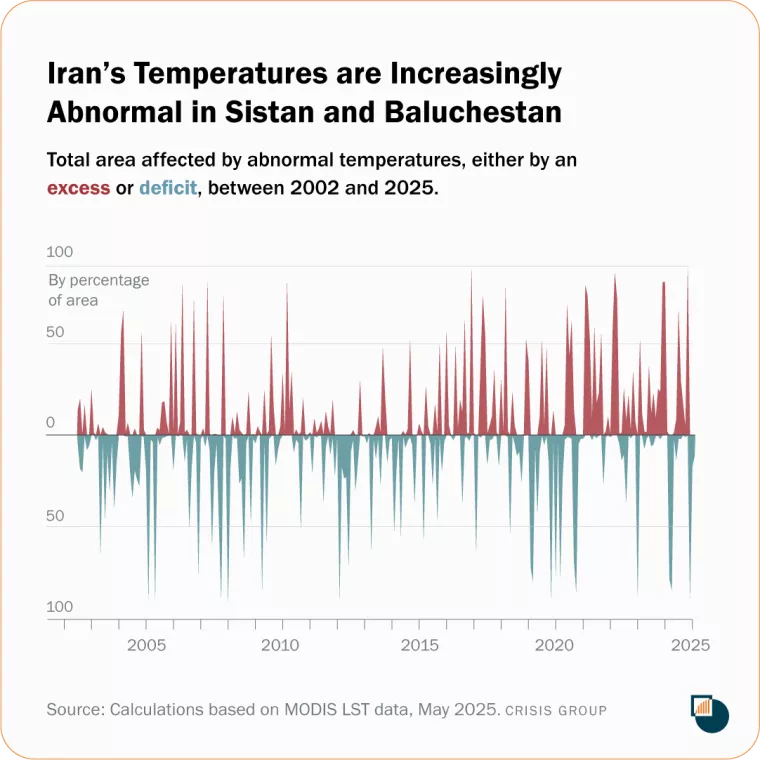
The sources of water scarcity are multiple and overlapping. Rising temperatures and sporadic rainfall patterns have depleted both surface and groundwater reserves across the province.[1] The majority of rainfall is lost to evaporation before it can generate runoff or recharge underground reserves.[2] During periods of heavy rainfall, inadequate infrastructure prevents effective water storage.[3] As a result, significant volumes of rainwater are wasted as they flow into the desert, the sea or neighbouring Pakistan, running too quickly to soak into the soil and replenish aquifers.[4] What is not lost may be subject to mismanagement.[5] Highlighting the lack of downstream infrastructure to distribute water held in reservoirs, the province’s former governor acknowledged in 2020 that “most of the [reservoirs behind] dams built in Sistan and Baluchestan in recent years have turned into evaporation pans”.[6]
Fixing that problem would be no small challenge. The province’s vast size and dispersed population pose difficulties for water distribution.[7] More than one third of its villages lack access to water supply facilities.[8] Even in areas where they exist, drinking water availability remains inconsistent, particularly because of drought conditions and outdated infrastructure.[9] As a result, residents are forced to rely on tanker trucks, collection of rainwater or residual floodwater, which is often unsafe, as their primary sources of drinking water.[10] Meanwhile, reports of corruption and mismanagement help explain delays in completing water distribution projects that might alleviate hardship.[11]
A related issue is that Iran’s agricultural sector, which accounts for 70 to 90 per cent of national water consumption, is highly inefficient.[12] The expansion of farms reliant on highly subsidised water, low-efficiency irrigation systems and water-intensive crops has put immense pressure on the province’s dwindling water resources.[13] Over the past few decades, government policies aimed at achieving food self-sufficiency have led to an increase in overgrazing, ploughing and water use for agriculture. The result is more water scarcity and environmental degradation.[14] Economic isolation under sanctions has further reinforced a strategy designed to ensure food security. A former interior ministry official cited “the drive for self-sufficiency” and “the overexploitation of water reserves” as factors contributing to the drying of the Hamoun wetlands, which consist of three shallow, predominantly freshwater lakes: Hamoun-e-Helmand, which lies inside Sistan and Baluchestan, Hamoun-e-Puzak, which sits almost entirely inside Afghanistan, and Hamoun-e-Saberi, which straddles the Iran-Afghanistan border.[15]
Aside from mismanagement, a longstanding dispute between Iran and Afghanistan over the Hirmand (Helmand) River is making water scarcer in the province. The river, which originates in Afghanistan’s Hindu Kush mountains and flows over 1,000km before entering Iran, is the primary water source for the Sistan region and feeds the strained Hamoun lake system.[16]
Claims and counter-claims by Tehran and Kabul concerning the river’s use continue to mount. Tehran accuses Kabul of violating the 1973 Afghan-Iranian Helmand River Water Treaty by failing to deliver the agreed-upon water quota to Iran.[17] Iranian officials also argue that Afghanistan’s construction of several dams, including the Kajaki and Kamal Khan projects, has significantly reduced the river’s flow into Iran, periodically drying up Hamoun and devastating its ecosystems and its communities.[18] The Afghan authorities counter that the reduced water flow is attributable to persistent drought.[19] But Iranian officials reject that argument, pointing to satellite imagery showing substantial water accumulation behind Afghan dams, as well as diversion, to support their allegations.[20] An Iranian provincial official alleged that, in recent years, Afghanistan has allowed floodwaters to spill into Iran only when it cannot contain them.[21]
[1] Iran has warmed by more than 1°C since the 1950s, faster than the global average, with overall rainfall trends remaining weak and precipitation becoming more erratic. See Appendix B. In Sistan and Baluchestan, the mean temperature has increased from 22.41°C (1961-1990) to 23.44°C (1991-2020), while annual rainfall fell by roughly one fifth (from 113mm to 89mm) over the same period. Temperature data indicates that hot anomalies increasingly dominate in the province, marking a transition toward persistent heat stress conditions. See Appendix C. “Current Climate Trends and Variability: Iran”, Climate Change Knowledge Portal, World Bank; “Aqueduct Water Risk Atlas”, World Resources Institute; and Omid Alizadeh-Choobari and M. S. Najafi, “Extreme Weather Events in Iran under a Changing Climate”, Climate Dynamics, vol. 50, no. 1-2 (2018).
[2] Iran receives about 400 billion cubic metres of water from rainfall each year. Of this volume, approximately 70 per cent is lost to evaporation and evapotranspiration. “Third National Communication to United Nations Framework Convention on Climate Change”, Department of Environment of the Islamic Republic of Iran, December 2017. See also “Evaporation; The fate of more than two thirds of the country’s rainfall”, Mehr, 9 December 2022 [Persian].
[3] Following the 2024 floods in Sistan and Baluchestan, the then-energy minister estimated that the volume of rain in parts of the province was equivalent to what they normally get over two and a half years. “In some areas, we witnessed over 400mm of rainfall in about twenty days”. Quoted in “Sistan and Baluchestan got two and a half years’ worth of rainfall in just a few days”, Iranian Students’ News Agency, 5 March 2024 [Persian]. The director general of meteorology of Sistan and Baluchestan, an advocate for drought-resilient water storage projects, said, “If we can capture just 10 per cent of the province’s annual average rainfall of 100mm, we could fully meet its water needs”. Quoted in “50 years of drought in one of Iran’s largest provinces and rainfall details”, Hamshahri Online, 12 November 2024 [Persian]. There are already more than two dozen dams in the province. The government is planning to build twelve more. “Finalisation of studies for the construction of twelve dams in Sistan and Baluchestan”, Iranian Students’ News Agency, 18 November 2024 [Persian].
[4] “Water management in drought conditions”, Shargh, 12 March 2024 [Persian]. Satellite imagery from after the January 2020 floods shows the water’s path into the Sea of Oman. See, “Flooding in Southern Iran”, European Space Agency, 15 January 2020.
[5] Kaveh Madani, “Water Management in Iran: What is Causing the Looming Crisis”, Journal of Environmental Studies and Sciences, vol. 4 (2014); Kaveh Madani, “Explainer: Iran’s ‘Water Bankruptcy’”, The Iran Primer, 5 December 2021; and Ali Akbar Barati, Milad Dehghani Pour and Mohsen Adeli Sardooei, “Water Crisis in Iran: A System Dynamics Approach on Water, Energy, Food, Land and Climate Nexus”, Science of the Total Environment, vol. 882 (2023).
[6] Quoted in “Wastage of ‘millions of cubic metres of water’ in country’s driest province: A precious resource lost to mismanagement”, Tasnim News Agency, 21 July 2022 [Persian]. Claiming zero budget allocation for countering water evaporation in reservoirs, a local official said, “The only funds I receive are for my employees’ salaries, with no additional funding for infrastructure”. Crisis Group telephone interview, December 2023. For more on evaporative water losses from major reservoirs, see Hannes Nevermann, et al., “Quantifying Water Evaporation from Large Reservoirs: Implications for Water Management in Water-stressed Regions”, Environmental Research, vol. 262 (2024); and Hannes Nevermann, et al., “Struggling over Water, Losing It through Evaporation: The Case of Afghanistan and Iran”, Journal of Environmental Management, vol. 375 (2025).
[7] According to a local water and wastewater official, “The average cost of developing infrastructure for the sustainable supply, transmission and distribution of water and electricity in Sistan and Baluchestan province has risen to more than twice the national average”. Quoted in “Average cost of water and electricity infrastructure in Sistan and Baluchestan more than twice national average”, Sistan and Baluchestan Water and Wastewater Company, 23 November 2024 [Persian].
[8] “27 trillion tomans needed to achieve 96 per cent sustainable water index in Sistan and Baluchestan villages”, Iranian Students’ News Agency, 19 October 2024 [Persian].
[9] Coastal cities in Baluchestan rely on desalinated seawater due to limited freshwater supply, but capacity has not kept pace with population growth, and drinking water is rationed in some areas. According to the head of Chabahar’s city council, “The city’s desalination plant, built 30 years ago for 70,000 people, is now insufficient for its population of over 140,000”. Quoted in “Water scarcity by the sea”, Iranian Labour News Agency, 12 January 2025 [Persian]. In addition to supply shortages, parts of the water distribution network are ageing, leading to inefficient water allocation and significant losses.
[10] “Mobile water supply to 900 villages in Sistan and Baluchestan”, Iranian Students’ News Agency, 11 February 2025 [Persian]; and “80 Dashtiari villages suffer from severe thirst as water shortage worsens”, Tasnim News Agency, 3 June 2025 [Persian].
[11] See, for example, “Zirdan dam contractor terminated: Why has Baluchestan’s key water project faced such long delays?”, Tasnim News Agency, 14 November 2020 [Persian]; and “Former head of rural water and wastewater in Sistan and Baluchestan arrested”, Tasnim News Agency, 24 April 2020 [Persian].
[12] “Energy ministry: 90 per cent of the country’s water used in agriculture”, Tasnim News Agency, 2 November 2023 [Persian]; “Agriculture accounts for 70 per cent of water consumption”, Islamic Republic News Agency, 2 September 2023 [Persian]; and Barati, Dehghani Pour and Sardooei, “Water Crisis in Iran: A System Dynamics Approach on Water, Energy, Food, Land and Climate Nexus”, op. cit.
[13] Mohsen Maghrebi et al., “Iran’s Agriculture in the Anthropocene”, Earth’s Future, vol. 8, no. 9 (2020); Atena Mirzaei, et al., “The Groundwater‒Energy-Food Nexus in Iran’s Agricultural Sector: Implications for Water Security”, Water, vol. 11, no. 9 (2019); and Fatemeh Rastegaripour, et al., “Assessing the Impacts of Climate Change on Water Resource Management and Crop Patterns in Eastern Iran”, Agricultural Water Management, vol. 295 (2024).
[14] For a collection of Ayatollah Khamenei’s statements on the need for agricultural self-sufficiency, see “Supreme Leader: Iran can produce food for a population four times larger than its own”, Tasnim News Agency, 30 May 2017 [Persian]. A former security official acknowledged that the ideological approach to development has contributed to unsustainable, uneven growth. “Iran’s environmental crisis is closely tied to its doctrine of self-sufficiency, which has led to the overexploitation of water resources. One example is the costly surface water collection projects in the arid region of Sistan – an area with extremely high evaporation rates – aimed at reviving the Chah-Nimeh reservoirs… [ignoring] environmental considerations which should take precedence over agriculture and self-sufficiency”. Crisis Group interview, Tehran, February 2024.
[15] Crisis Group interview, Tehran, November 2023. Disregarding environmental conditions and severe water scarcity, the government undertakes costly water-intensive projects to support agriculture, even as access to drinking water remains a challenge for local people. In 2021, the Iranian parliament approved an investigation into an irrigation project in Sistan and Baluchestan province, which had remained unfinished after six years and $850 million in spending. The results have yet to be made public, and in March, a member of parliament from the province pledged to follow up on the matter – a telling example of the lack of transparency and institutional accountability. See “Parliament approves investigation into Sistan irrigation project”, Iranian Labour News Agency, 14 December 2021 [Persian]; and post on X by Farhad Shahraki, @shahraki_farhad, Iranian parliament member, 29 March 2025 [Persian].
[16] The Hamoun region on the Iranian side is protected under the 1971 Convention on Wetlands of International Importance Especially as Waterfowl Habitat, otherwise known as the Ramsar Convention, dedicated to the conservation and sustainable use of wetlands. In 1990, the two lakes were listed on the Montreux Record, a register maintained under the Ramsar Convention, as dams and water diversion in Afghanistan led to declining water levels. “The Hamoun Wetlands”, U.S. Geological Survey; and “Hamoun-e-Saberi and Hamoun-e-Helmand”, Ramsar Sites Information Service.
[17] “The Afghan-Iranian Helmand River Water Treaty”, International Water Law Project. For more, see Fatemeh Aman, “Water Dispute Escalating between Iran and Afghanistan”, Atlantic Council, August 2016.
[18] A study examining the wetlands’ ecosystem between 1977 to 2014 found that “in 1977 and 1991, the water body area in the downstream region is higher than in the upstream region, which is logical in a catchment basin. But in 2001 and 2014, this pattern was reversed. Changes in the marsh area follow the same pattern as the water changes. The agriculture area is higher in upstream in all years, but despite the water limitation, agriculture was developed intensively there through 2014 while agriculture remained low in downstream region”. Saeideh Maleki et al., “Human and Climate Effects on the Hamoun Wetlands”, Weather, Climate and Society, vol. 11, no. 3 (2019).
[19] “Statement of the Islamic Emirate Regarding the Recent Remarks of Iran’s President”, Islamic Emirate of Afghanistan, 18 May 2023 [Persian].
[20] “Satellite imagery contradicted Afghanistan’s claim”, Islamic Republic News Agency, 23 May 2023 [Persian]; and “The Taliban would rather waste water than let it reach Iran”, Hamshahri Online, 23 April 2024 [Persian]. In August 2023, the Taliban allowed an Iranian technical delegation to visit Afghanistan to measure river flow upstream of the Kajaki dam for the first time. Due to the Taliban government’s interpretation of the 1973 treaty, however, it denied the Iranians access to the dam itself. Following the visit, Iranian authorities confirmed that water levels were lower than in a normal year, claiming that Iran had not received its “fair” share based on the 1973 treaty. “Kazemi Qomi says Iranian experts believe Helmand’s water has decreased, but our water rights must be given ‘accurately and fairly’”, BBC Persian, 20 August 2023 [Persian]; and “The Taliban’s Ministry of Foreign Affairs claimed: Iranian delegation’s evaluation of Dehrawud station shows less than normal hydrological year”, Iranian Students’ News Agency, 13 August 2023 [Persian].
[21] Crisis Group telephone interview, January 2024.
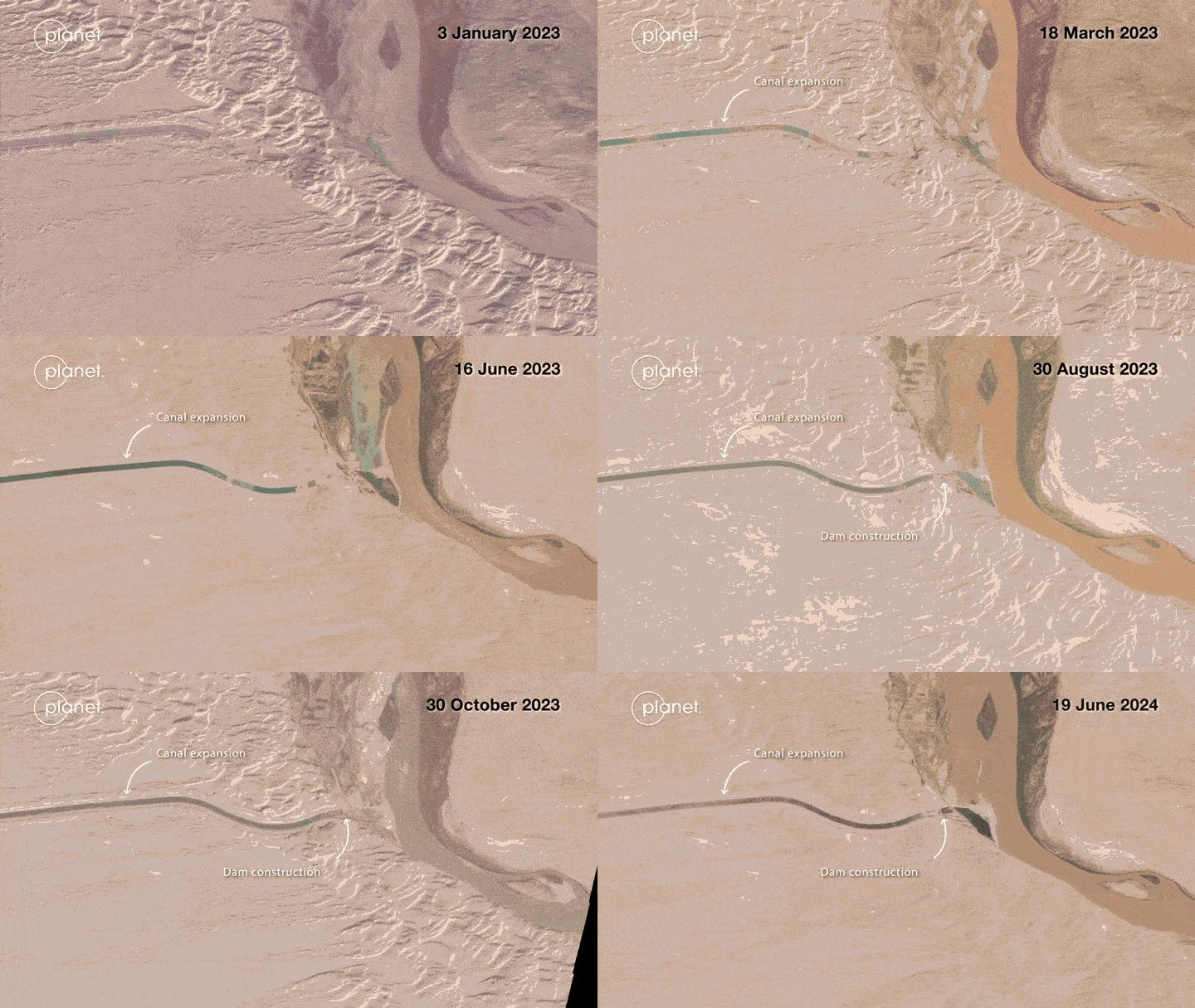
Planet Labs PBC / CRISIS GROUP
Hamoun’s desiccation has compounded Sistan and Baluchestan’s longstanding ecological challenges. A reduction in water and humidity in an already arid region has led to loss of vegetation cover and exposed vast stretches of fine silt, transforming the region into a dust storm hotspot.[1] Whenever Hamoun’s lakes dry up, dust emissions surge by an average of 40 per cent, peaking at 80 per cent in some areas.[2] The situation is particularly dire during the so-called 120-day winds, a powerful series of disturbances that sweep through the province during the summer months.[3] These storms degrade air quality, pose severe respiratory risks and damage both farms and water sources.[4]
[1] “A dry lake Hamoun means more dust storms”, NASA Earth Observatory, 7 February 2023. Jazmurian basin to the west of Baluchestan, which consists of seasonal lakes, is another area where intense dust storms brew to plague neighbouring towns and villages. Hamid Gholami, et al., “Machine-learning Algorithms for Predicting Land Susceptibility to Dust Emissions: The Case of the Jazmurian Basin, Iran”, Atmospheric Pollution Research, vol. 11 (2020).
[2] Ali Darvishi Boloorani, et al., “Influence of Hamoun Lakes’ Dry Conditions on Dust Emission and Radiative Forcing over Sistan Plain, Iran”, Atmospheric Research, vol. 272 (2022).
[3] Omid Alizadeh, Peyman Zawar-Reza and Andrew Philip Sturman, “The ‘Wind of 120 Days’ and Dust Storm Activity over the Sistan Basin”, Atmospheric Research, vol. 143 (2014).
[4] “Sand and Dust Storms Risk Assessment in Asia and the Pacific”, Asian and Pacific Centre for the Development of Disaster Information Management, UN ESCAP, 2021; “Sand and Dust Storms”, FAO, 2023. Whenever winds intensify in Sistan and Baluchestan, hundreds of people seek medical attention for respiratory, cardiovascular and eye-related issues. For instance, in September 2023 alone, over 2,200 people in the province’s northern part visited health care facilities due to severe health complications, primarily respiratory, cardiovascular and eye-related. More than 150 individuals required hospitalisation, and three people died in accidents caused by reduced visibility. “Storm sends 2,278 people to hospitals in Sistan”, Iranian Students’ News Agency, 25 September 2023 [Persian]. Sistan and Baluchestan is a hotspot for respiratory diseases in Iran due to dry weather, prolonged droughts and frequent dust storms. For example, it has the highest tuberculosis incidence rate in the country. Behzad Kiani et al., “Spatio-temporal Epidemiology of the Tuberculosis Incidence Rate in Iran 2008 to 2018”, PMC Public Health, vol. 21 (2021).
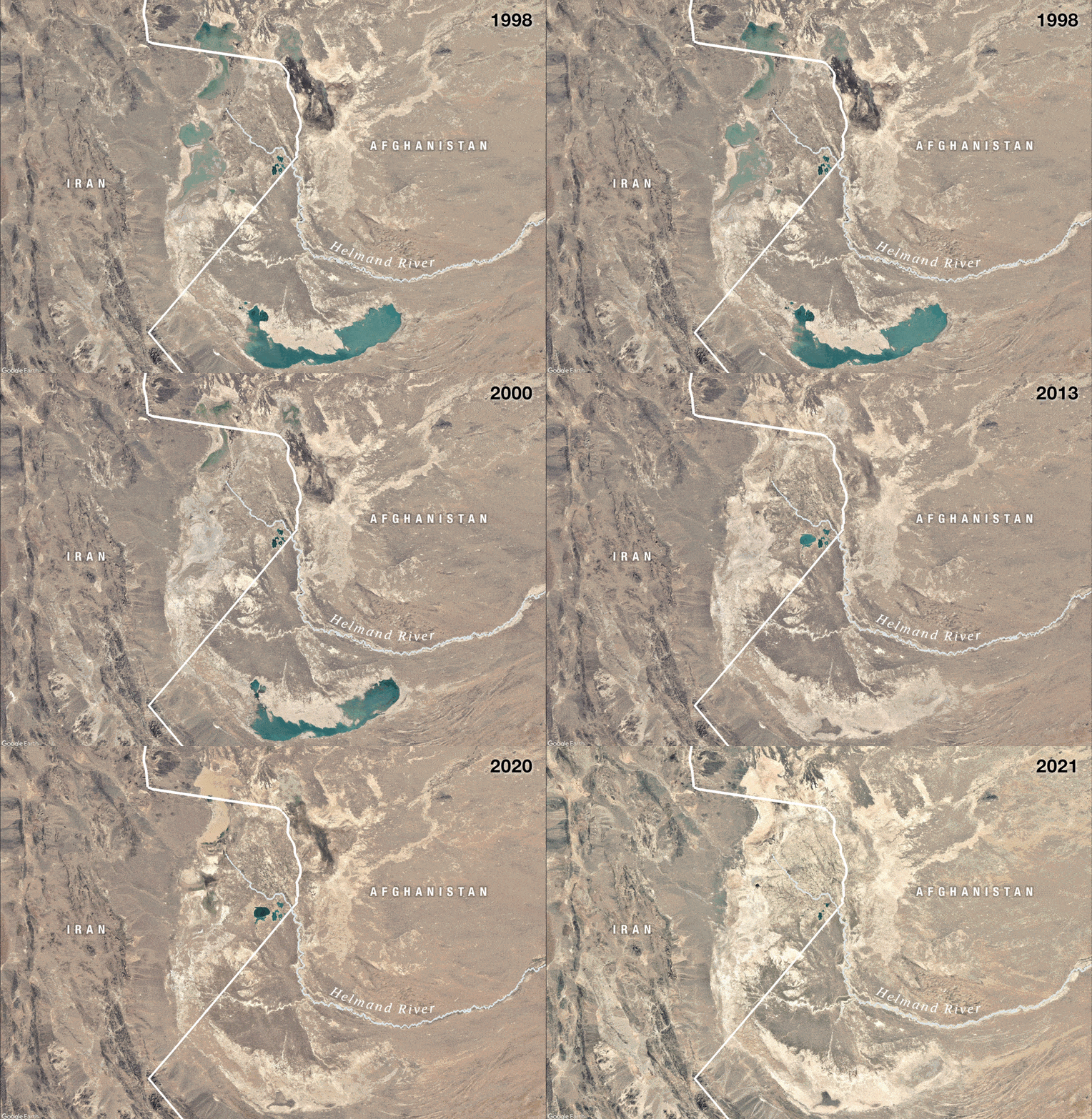
Google Earth / CRISIS GROUP
As surface water dwindles, provincial residents and other Iranians must rely more on alternative sources, notably groundwater extraction. Over the years, both legal and illegal well drilling has intensified across the province.[1] Over-extraction, coupled with persistent drought, has led to declining groundwater levels, lowered water quality and heightened the risk of land subsidence.[2]
With accessible groundwater facing critical conditions in the province, authorities have begun digging ultra-deep wells, drilling down as far as 3km in search of what is known as “fossil water”.[3] This method, however, has sparked significant controversy, as extracting fossil water is resource-intensive, requiring advanced and costly technology.[4] Often, the water is highly saline or contaminated, making purification both technically challenging and financially burdensome.[5] More critically, excessive extraction could permanently deplete fossil water reserves that took thousands of years to accumulate.[6] While proponents cite successful deep-water extraction projects in other countries, many experts warn of its long-term risks of exhausting water reserves.[7]
Large-scale projects to desalinate water from southern shores, including near Chabahar, and transport it inland represent another ambitious attempt to address chronic water shortages.[8] Such projects involve significant financial and environmental costs, ranging from damage to marine life to high energy use and ecosystem disruption.[9] While the government is expected to conduct thorough environmental assessments before launch, experts and activists have questioned whether it will pay sufficient attention to the findings.[10] Unless efforts to improve water use efficiency precede large-scale supply projects, such investments risk reinforcing unsustainable consumption patterns.
While there is no proven direct link between climate change and conflict, climate-related pressures – such as drought, extreme heat and water scarcity – can interact with political and socio-economic stressors to increase the risk of instability. In Iran, water shortages have already triggered large protests, notably in Khuzestan, where a combination of mismanagement and social grievances, including among the Arab minority, fuelled widespread unrest.[11] In Sistan and Baluchestan, environmental problems have also sparked demonstrations, though smaller ones.[12] Still, the potential impact of water scarcity on a province already under the strains described above should not be underestimated.
[1] “Closure of 2,500 illegal wells in Sistan and Baluchestan”, Iranian Students’ News Agency, 6 December 2024 [Persian]; and “Drilling of 115 wells in water-rich plains of Sistan region”, Iranian Students’ News Agency, 21 July 2023 [Persian]. According to Iranian officials, water extracted through the country’s licenced wells, particularly in arid and semi-arid regions, significantly exceeds the country’s sustainable water capacity. “Licenced and Unlicenced Wells: A Growing Threat to Groundwater”, Iranian Chamber of Commerce, Industries, Mines and Agriculture, 6 May 2023 [Persian].
[2] Mahdi Panahi et al., “A Country-wide Assessment of Iran’s Land Subsidence Susceptibility Using Satellite-based InSAR and Machine Learning”, Geocarto International, vol. 37, no. 26 (2022); “Which provinces in the country are at potential risk of land subsidence?”, Tasnim News Agency, 7 February 2024 [Persian]; and “All provinces, except Gilan, affected by land subsidence; water allocated to agriculture should decrease”, Islamic Republic News Agency, 8 January 2025 [Persian]. According to Iranian officials, to mitigate the impact of groundwater overextraction, annual withdrawals from aquifers would need to be reduced by an estimated 14.7 per cent. “Licenced and Unlicenced Wells: A Growing Threat to Groundwater”, op. cit.
[3] The government has drilled at least four deep wells over the last decade in the province, finding water at depths of around 1,800m. One of these wells is in Baluchestan. “The fourth deep well in Sistan and Balochistan also reached water”, Iran Newspaper, 15 June 2022 [Persian].
[4] The 2023-2024 budget allocated 10,000 billion rials (approximately $20 million, based on the exchange rate at the time) to the National Iranian Oil Company for the development, drilling and exploitation of deep underground aquifers and other water-related technologies. “Allocation of one trillion tomans for the exploitation of deep water resources and other technologies”, Islamic Republic News Agency, 1 March 2023 [Persian].
[5] “Parliament research centre warns of budget allocation for extraction of ‘fossil water’”, Tasnim News Agency, 29 January 2023 [Persian].
[6] R. Mir et al., “Fossil Water: Last Resort to Resolve Long-standing Water Scarcity?”, Agricultural Water Management, vol. 261 (March 2022).
[7] “In the limbo of deep waters”, Iranian Students’ News Agency, 21 February 2024 [Persian]; and “Kalantari: The department of environment opposes any extraction and exploitation of deep water resources”, Dolat, 21 January 2018 [Persian].
[8] A project for transporting water from the Sea of Oman to Iran’s central plateau includes five planned pipelines, one of which – stretching approximately 1,342km – originates in Chabahar. For more, see the official website of the main contractor, the Industries and Mines Water Supply Company.
[9] See, for example, Wen Zhuang, “Eco-environmental Impact of Inter-basin Water Transfer Projects: A Review”, Environmental Science and Pollution Research, vol. 23 (2016).
[10] On the internal discussions, see “Pipelines from the sea: Iran’s emerging environmental concern”, Etemad, 28 November 2023 [Persian]; and “Water transfer: A source of life or a risk to the living?”, Iranian Students News Agency, 24 February 2023 [Persian].
[11] Crisis Group Report, Iran’s Khuzestan: Thirst and Turmoil, op. cit.
[12] See, for example, “Protest in south-eastern Iran as water crisis deepens”, RFE/RL, 1 August 2023.
The challenges that Baluchestan faces are familiar to many of the regions on Iran’s periphery, though in some respects they are bigger than in most others. Baluchestan suffers not only from the underinvestment, poverty and climate shocks that affect the province of Sistan and Baluchestan as a whole, but also from ethnic and sectarian tensions that have fuelled a small but non-negligible separatist movement – and periodically bubbled over into cross-border violence. Tackling all of these issues at once is not realistic. But beginning to address certain cross-cutting challenges could help move things toward a more stable status quo.
First, it is hard to imagine making serious inroads on the situation in Baluchestan without improving governance. Ideas about how to do so have been circulating among experts and policymakers, but these are at best uncertain. One proposal, which has been repeatedly floated, would involve dividing the province of Sistan and Baluchestan, as was done to the north-eastern province of Khorasan in 2004. Proponents of such remapping contend that it would facilitate more effective administration and better targeted approaches to local problems. Critics counter that it would do little to address the region’s challenges, evinced by continued mismanagement in Khorasan.[1]
Indeed, regardless of whether the province’s boundaries are redrawn or not, engaging Baluch residents is the sine qua non for effective planning of policies that address local needs. Tehran has seemed reluctant to move in this direction. It has oscillated between attempting to co-opt or confront figures like Molavi Abdolhamid, depending on whether they are aligned with or opposed to its policies. This approach will not foster a productive dynamic. The same can be said of what local observers characterise as the government’s “artificial elite-making”: namely, empowering locals who owe their political and economic standing to fealty to Tehran, rather than to a record of representing local interests.[2] An approach that is likely to yield more local buy-in, as well as generate a greater diversity of local perspectives when it comes to problem solving, would be to give greater agency to the population, including through increased involvement of qualified Baluch technocrats and experts in provincial administration.
Secondly, in seeking to empower local officials and reduce the central government’s micromanagement of provincial and regional affairs, it will be important to achieve the right division of labour and resources between centre and periphery. This exercise is both delicate and highly consequential for provinces like Sistan and Baluchestan, which cannot match what the state can – or at least, should – provide. If doing more to share power with border provinces and regions becomes an alibi for leaving them to their own devices in terms of resources and capacity, then their situation will hardly be improved.
A new initiative for “provincial diplomacy” that Iran’s government has been touting runs this risk. It is ostensibly aimed at giving officials in border regions greater authority to engage directly with neighbouring countries, with the aim of enhancing cross-border cooperation and regional development. Announcing the concept in February, Foreign Minister Abbas Araghchi asserted that “border provinces will resolve border issues and problems related to smuggling, border crossings and the movement of goods and travellers themselves”.[3] In the aftermath of the twelve-day war, during which Israel allegedly tried to decapitate the political leadership in Tehran by targeting a high-level national security meeting, President Pezeshkian delegated his executive powers to provincial governors, primarily to ensure continuity of government in case of a future conflict but also to enhance bureaucratic processes.[4] For such efforts to succeed, however, the government must match them with the resources and expertise provincial officials need.
[1] “Dividing an important province becomes more serious”, Eghtesad Online, 3 April 2024 [Persian].
[2] A Baluch analyst contended, “Some of those whom the government treats as elites would have no real standing in Baluch society without their ties to the state and the privileges they receive from it. Their influence is artificial, sustained only by the benefits and authority they are given … This causes deep dissatisfaction while increasing corruption”. Crisis Group interview, Zahedan, May 2024.
[3] “The Foreign Ministry’s New Initiative: Provincial Diplomacy”, Iranian Foreign Ministry, 21 February 2025.
[4] James LaPorta, “Iran’s president injured during Israeli strikes, U.S. intelligence sources say”, CBS News, 17 July 2025; “Power delegation to governors: a golden opportunity for local development”, IRIB News Agency, 28 June 2025 [Persian].
Tehran will need to revisit its heavy-handed approach to security to clear the way for positive change in Baluchestan and elsewhere.
Thirdly, Tehran will need to revisit its heavy-handed approach to security to clear the way for positive change in Baluchestan and elsewhere. To that end, the state could take an overdue step by ensuring broader accountability for those involved in the “bloody Friday” crackdown, which remains a deeply traumatic and unresolved episode among the Baluch. The state did prosecute several officers for unlawful killings, handing down prison terms of up to ten years to some and dismissing others from service. But given the opacity as to the identities of those under trial, and the charges against them, UN experts assessed the response as “inadequate”, saying it raised “serious concerns as to whether state investigations were conducted in good faith”.[1] A credible process requires transparent, impartial trials, with penalties that reflect the gravity of the offences, particularly in cases involving the killing of civilians. Equally essential is the provision of redress for all those who were killed or injured – whether through compensation for victims and their families or accountability for the culprits through legal or material means.
Regrettably, the Islamic Republic’s default response to dissent – in Baluchestan and other regions – has been to see it uniformly as a danger to state security, even when it consists of peaceful protests and demonstrations. It thus tends to respond with repression and restrictions, which both fail to address socio-economic sources of discontent and risk compounding them instead.[2] This mindset also means that the central government tends to see minority populations in border provinces as potential threats to a greatly exaggerated degree. As a former Baluch parliamentarian noted, “Even in positions such as customs officers and security guards in the free trade zone, most personnel are non-Baluch”.[3]
Tehran’s tendency to perceive security concerns as a reason to under-invest in Baluchestan and other regions on Iran’s periphery has helped entrench their lagging development. The prevailing view in Tehran seems to be that security is a prerequisite for development. While insecurity can indeed pose risks to investment, in practice, they cannot be sequential and must go hand in hand, reinforcing each other, lest the region in question slide further into deprivation and its population despair of engaging in licit livelihoods. Significant investment is required in everything from schools and hospitals to port facilities that harness Baluchestan’s location for the betterment of its population.
A promising area for investment is the region’s railways, which should be connected to the national network to help turn Baluchestan into a transit hub, given its proximity to borders and the sea. In 2024, the government announced a special budget allocation for Sistan and Baluchestan, earmarked for developing transport links and local industry.[4] It was a step in the right direction, but to ensure that the funds are used effectively, Tehran should conduct regular impact assessments set against clearly defined objectives to spur local job growth, engage the private sector and ensure there are robust safeguards against corruption, waste and nugatory projects.[5] It will take years to undo decades of mismanagement and underinvestment, but the lack of effort in that direction is worsening conditions in a province already on the edge.
Fourthly, the authorities will need to take on the difficult but essential work of addressing the region’s climate crisis. Rising temperatures, sporadic rainfall, over-extraction and poor planning have converged to make water scarcity a major crisis in Sistan and Baluchestan – and an increasingly pressing concern nationwide.[6] Scientific data from the past century shows that, since the 1990s, the Middle East has warmed at twice the average global rate, leading to more frequent and severe heat waves, floods, dust storms and droughts, a trend likely to continue or worsen.[7]
[1] A/HRC/58/63, op. cit. Referring to the victims’ families’ demands, Molavi Abdolhamid asked for sentence of qisas (retribution in kind) for those responsible for the killings. “The proceedings should be conducted in a way that satisfies our people, especially the families of those killed and injured in these events”, he highlighted. Quoted in “New government stresses resolving the Zahedan and Khash incidents”, abdolhamid.net, 13 November 2024 [Persian]. See also “‘Bloody Friday’ victims’ families protest verdict, demand prosecution of those who ordered the attack”, Voice of America, 16 January 2025 [Persian]. The state officially recognised only 35 deaths and excluded others it labelled “undocumented” or “of Afghan nationality” from compensation and other remedies. “Chief justice of Sistan and Baluchestan outlines latest details of the Zahedan 30 September incident case”, Iranian Students’ News Agency, 12 January 2025 [Persian].
[2] A former security official asserted, “Uneven development fuels social fragmentation, and the linguistic and religious differences between the Sunni Baluch community and the rest of the country, particularly the central government, often turn into political rifts with security implications. As a result, many inherently social issues quickly take on a political character in this province and are swiftly securitised”. Crisis Group interview, Tehran, February 2024. Pirmohammad Mollazehi, a prominent Baluch expert on local politics, said, “When development does not take place in the region, a gap emerges between the government’s perspective and that of the local population. The Baluch citizen begins to suspect that, in the absence of development, the state might be aiming to alter the region’s demographic makeup. Meanwhile, the government believes that by militarising the area, it can enhance security. As a result, no real convergence or mutual understanding is established, because both sides are essentially speaking past each other”. Quoted in “Sistan and Baluchestan: What it is, and what it ought to be”, Shargh, 16 November 2023 [Persian].
[3] “Prioritising security concerns has not only distorted planning and increased costs but also created an image of insecurity, discouraging domestic and foreign investment”, he added. Crisis Group interview, Tehran, March 2024.
[4] “Allocating special budget for Sistan and Baluchestan’s development”, Mehr News Agency, 21 November 2024 [Persian].
[5] Describing unemployment as the province’s most immediate challenge, a senior lawmaker conceded, “The private sector is virtually inactive in the province, and investors from other regions are reluctant to engage in economic activities there”. Crisis Group interview, member of parliamentary presidium, Tehran, January 2024.
[6] “The 30 million water riddle”, Donya-e Eqtesad, 10 March 2025 [Persian]. “Tehran is at risk of running out of water within weeks”, The New York Times, 26 July 2025.
[7] “Feeling the Heat: Adapting to Climate Change in the Middle East and Central Asia”, International Monetary Fund, 30 March 2022.
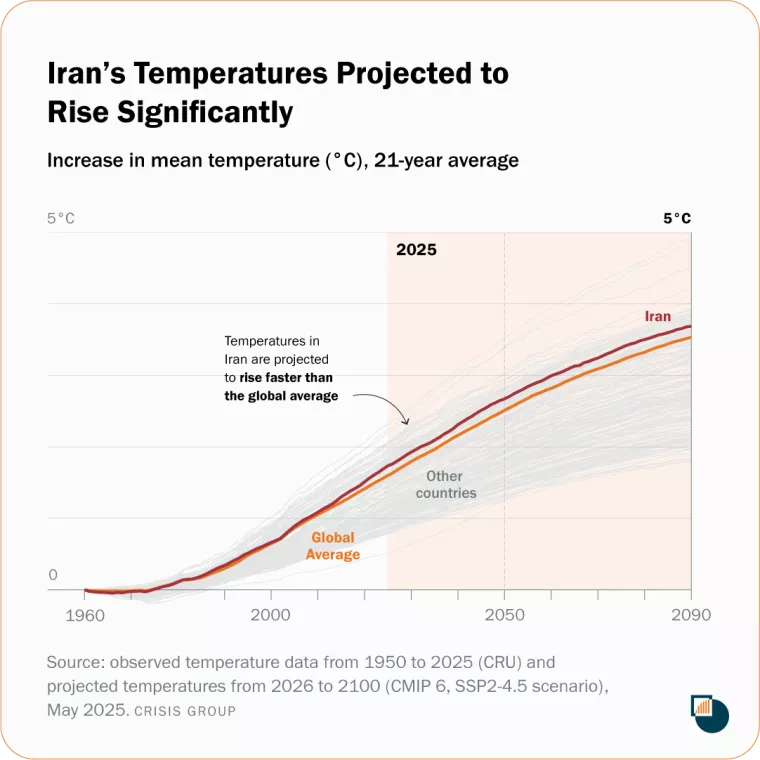
Failing to implement environmentally sound policies will only deepen the crisis, further imperilling both Baluchestan’s fragile ecosystems and its already vulnerable communities. To ensure long-term resilience in the region, the government should adapt and improve water management strategies, such as improving storage efficiency (eg, investing in covered or underground facilities) to prevent evaporation and allocate resources to maintain and upgrade infrastructure. There are also options for water demand management, including tariffs for municipal and industrial uses, quotas for agriculture, and technologies such as remote sensing and smart metres that can help monitor users’ compliance with policies.
It is also essential to continue efforts with neighbouring countries to find better solutions to sharing scarce water. Though Tehran and Kabul have engaged on resolving water disputes, they have failed to secure an understanding that would address Iranian concerns about the downstream impact of dam construction in Afghanistan.[1] What the two countries need is international support to strengthen infrastructure and adopt science-based water management.[2] While trying to come to terms, the government should also step up efforts to improve resource management in Iran. It should attempt to mitigate the impact of the drought and flooding cycles. Adopting heat-resilient water management strategies, upgrading water distribution infrastructure, integrating expert-driven environmental impact assessments into project planning, and borrowing best practices from regions with comparable climates are all promising avenues to explore. The government could then apply the lessons from Baluchestan where relevant elsewhere in the country.
[1] “Iran calls on Afghanistan to honour water rights in border river disputes”, Tehran Times, 3 January 2025; and “Afghanistan warns Iran after dam project criticism”, Agence France Presse, 8 January 2025. A senior lawmaker admitted in March that “if the country’s main challenge today is water, its planning, orientation and spending should, with due consideration to limited resources, address this challenge, but unfortunately this is not the case. At present, water and sewage companies are bankrupt or have debts, and the government is not focusing on the water sector”. Ebrahim Rezai, member of parliament’s national security and foreign policy committee, quoted in “Charting a roadmap for water diplomacy with neighbours”, Donya-e Eqtesad, 10 March 2025 [Persian].
[2] Aman, “Water Dispute Escalating between Iran and Afghanistan”, op. cit.
Sanctions, though not the main cause, have compounded Baluchestan’s environmental crisis.
It also bears mention that sanctions, though not the main cause, have compounded Baluchestan’s environmental crisis.[1] Iran has limited access to the cutting-edge technology, expertise and money it so urgently needs for climate adaptation. It should be able to tap the World Bank and the Global Environment Facility for such funding.[2]
More critically, sanctions resulting from Iran’s standoff with the U.S. have pushed environmental concerns to the margins of Iran’s policy agenda, forcing the leadership to adopt survival strategies that put short-term political and economic stability over sustainable water management.[3] To the extent that nuclear talks yield sanctions relief, it could have positive effects on government efforts to manage climate change. Conversely, continuation of tensions between Iran, on one hand, and Israel and the U.S., on the other, could only exacerbate Baluchestan’s predicament.
Finally, while Sistan and Baluchestan faces challenges specific to the province, many of the hurdles it is confronting are endemic to Iran as a whole, requiring national reforms. Issues such as corruption and mismanagement, social and cultural discontent, political infighting, and the gap between state and society are pervasive.[4] President Pezeshkian has been more candid than most Iranian leaders in acknowledging these problems, but so far, his government has made little progress in resolving them. Economic concerns are ubiquitous and getting worse.[5] The resource crisis is also becoming one of the country’s most acute challenges, with frequent water and power cuts highlighting the government’s failure to provide these services consistently. Citizens have responded with protests across the country, though not yet on a massive scale.[6]
The question of international sanctions looms over it all. The expansion of U.S. sanctions in the Trump administration’s renewed “maximum pressure” campaign could tighten the squeeze on Iran’s economy.[7] The restoration or “snapback” of pre-2015 UN sanctions, which could be triggered by the 2015 nuclear deal’s European participants in coming weeks, could deepen Iran’s diplomatic isolation and heighten tensions with the West.[8] Conversely, sanctions relief as part of an agreement over Iran’s nuclear program could unlock the funds and foreign expertise needed to make badly needed infrastructure upgrades, including in Baluchestan.
[1] “Climate Action Tracker: Iran”, Climate Action Tracker, 30 October 2023; and “U.S. sanctions violate Iranian people’s rights to clean environment, health and life: UN experts”, press release, UN Office of the High Commissioner for Human Rights, 20 December 2022.
[2] Mohammad Reza Farzanegan et al., “Sanctions and carbon emissions in Iran”, Economic Research Forum, 9 July 2024; and Kaveh Madani, “The Unintended Environmental Implications of Iran Sanctions”, Johns Hopkins School of Advanced International Studies, 2021. Countries experiencing both conflict and climate change receive, on average, only one third of the climate financing per capita compared to countries affected by climate change but free of conflict. Iran receives $6.10 per capita less than the global average. “Giving Countries in Conflict Their Fair Share of Climate Finance”, Crisis Group Visual Explainer, 3 November 2022.
[3] “Shirin Hakim: Iran’s environmental challenge”, Babel (podcast), CSIS, 11 July 2023; and “Iran’s failure to tackle climate change – a question of priority”, Al Jazeera, 9 November 2021.
[4] Mohammad Ayatollahi Tabaar, “Why Iran is Entering a Dangerous Moment”, Journal of Democracy, September 2024. In the aftermath of the conflict with Israel and the U.S., there is growing demand for political change from prominent dissidents and civil society figures. But as of now, there is no sign that the government is seeking to alter its domestic or foreign policies, let alone entertain fundamental reforms. “Over 800 Iranian figures voiced support for Mir-Hossein Mousavi’s proposal for holding constituent assembly and revising the constitution”, BBC Persian, 16 June 2025 [Persian]; and “Statement by political activists and civil society actors: We are concerned about Iran’s future”, BBC Persian, 18 June 2025 [Persian].
[5] Inflation is running at well over 30 per cent, while the national currency has nearly halved in value since Pezeshkian took office in July 2024. The World Bank has projected GDP growth in 2025 at 2.7 per cent, down from 3 per cent in 2024, and forecast a further drop to 2.2 per cent in 2026. “Prospects for Inflation in 1404”, EcoIran, 2 March 2025 [Persian]; and “Global Economic Prospects”, World Bank, January 2025.
[6] Umud Shokri, “Iran’s energy dilemma: constraints, repercussions and policy options”, Carnegie Endowment for International Peace, 26 June 2025. See also “Protesters against power and water cuts in Sabzevar gather for two consecutive nights”, BBC Persian, 23 July 2025.
[7] “National Security Presidential Memorandum/NSPM-2”, White House, 4 February 2025.
[8] The UN Security Council resolution that endorsed the 2015 nuclear deal between Iran and world powers, or Joint Comprehensive Plan of Action, has a “snapback” mechanism for restoring international sanctions terminated as part of the agreement. The E3 (France, Germany and the UK) have warned Tehran that they will initiate snapback, which expires in mid-October, by the end of August unless Iran allows International Atomic Energy Agency inspectors back into its nuclear sites, accounts for highly enriched uranium stockpiles (whose status after the June war is unclear) and resumes negotiations with the U.S. Crisis Group interviews, E3/EU officials, July-August 2025.
The challenges that Baluchestan confronts are a layered mass of local issues; difficulties faced by many areas on the country’s periphery; and problems that afflict Iran as a whole. There are steps Tehran can and should take to promote development, more inclusive governance and better environmental stewardship in Baluchestan. Yet so long as the central government is preoccupied with geopolitics, and possibly even bigger crises at home, it could be slow to give this far-flung region the resources and attention that it needs – even as it urges national unity at a post-war moment. A deal between Tehran and Washington that relieves the economic strain created by sanctions could create more space for the Iranian government to begin getting its house in order, including with respect to Baluchestan and other border regions. But in any case, the government needs to begin chipping away at Baluchestan’s plight, which has implications for national and regional stability, and which the passage of time will only worsen.
Zahedan/Washington/Brussels, 19 August 2025
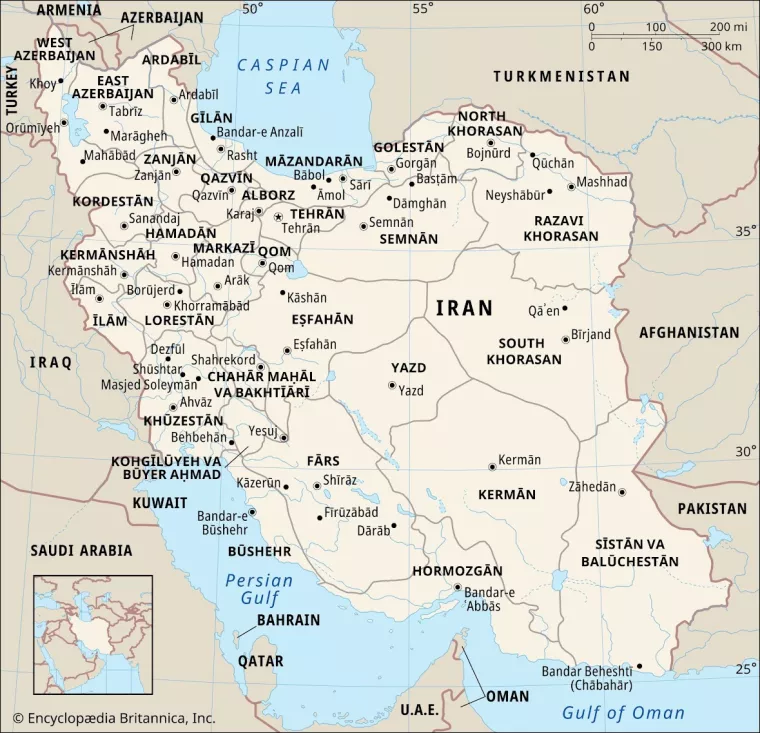
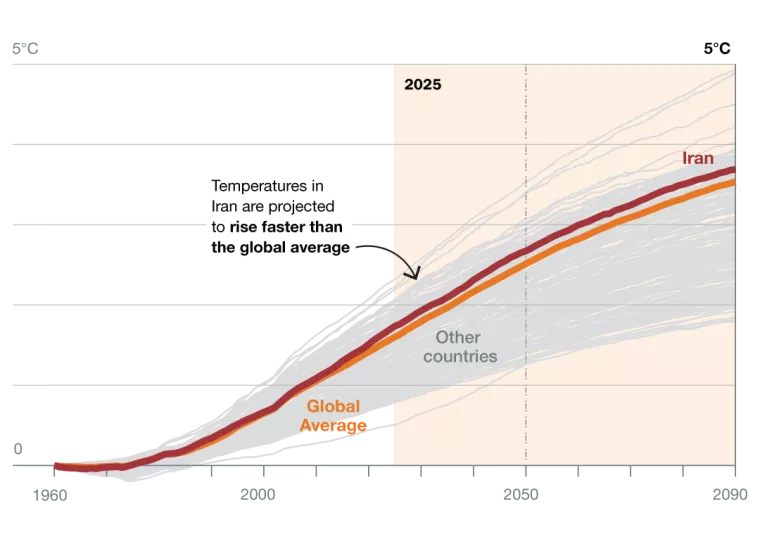
Source: Observed temperature data from 1950 to 2025 (CRU) and projected temperatures from 2026 to 2100 (CMIP 6, SSP2-4.5 scenario), May 2025. CRISIS GROUP
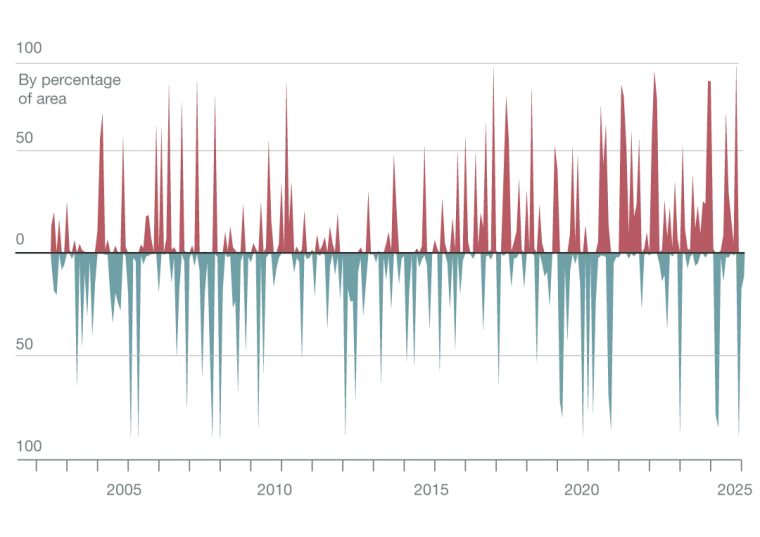
Source: Calculations based on MODIS LST data, May 2025. CRISIS GROUP
More for you
Iran’s Khuzestan: Thirst and Turmoil
Also available in Arabic, Persian, Farsi




Leave a Reply