Beware the Slide Toward Regime Change in Venezuela
pfranz
Thu, 10/23/2025 – 21:54
Beware the Slide Toward Regime Change in Venezuela
The Trump administration’s sabre rattling in the Caribbean is growing louder, but its ends remain opaque. What began purportedly as a campaign to stop illicit drugs from getting to U.S. shores looks increasingly like an attempt to force Venezuelan President Nicolás Maduro and his allies from power. Reports suggest that Caracas is taking the threat seriously, so much so that they have allegedly floated proposals to appease Washington – including offering the U.S. a dominant stake in Venezuela’s oil and mineral wealth. Yet the White House’s hostility to Maduro and frequency of U.S. missile strikes on supposed drug runners goes only so far in providing answers to two crucial questions: how hard would it be to remove Maduro, and how far Trump is willing to go to achieve that? The prospect of dramatic and decisive military action against the Venezuelan leader, whom Trump has accused of leading a “narco-terrorist” cartel, might appeal to the U.S. president. But he has long displayed an aversion to launching costly foreign adventures, and remaking Venezuela’s government through military or covert action is unlikely to be an easy or tidy affair. Washington should beware of regime change, whether or not packaged as counterterrorism, and should be candid about the costs, risks and likely consequences of a deeper intervention.
Washington’s interest in ousting Maduro is not new. During his first administration, Trump led what was known as a “maximum pressure” campaign to topple the government led by Maduro, who succeeded the left-wing populist President Hugo Chávez after his death in 2013. Secretary of State Marco Rubio – currently the driving force behind U.S. policy towards Venezuela, including the military build-up in the Caribbean – has made little secret of his desire to bring sweeping political change to the country, with backing from prominent Venezuelan opposition leaders. Nobel-prize winner María Corina Machado, whom the government barred from standing in last year’s presidential election, has amassed a wealth of evidence to show that Maduro stole her surrogate candidate’s victory at those polls. She has urged the U.S. and other capitals to press Maduro into leaving office and honour the authentic election results by handing them power. On the reckoning of Machado and her allies, the government is weak and divided, and a limited show of force should thus be enough to fuel its fissures and drive it from office.
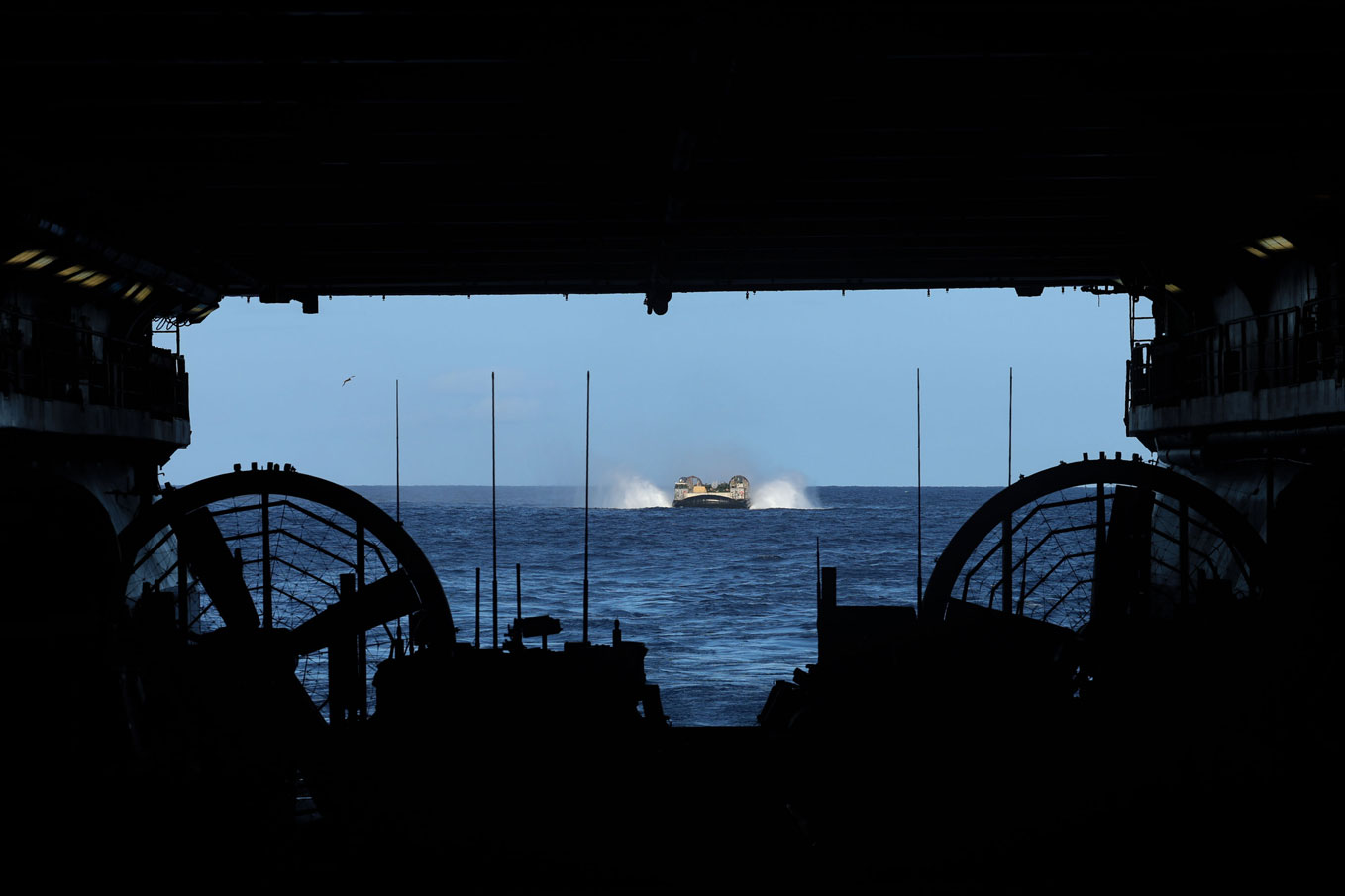
The U.S. has already parked 8 per cent of its entire global fleet of warships on the mission to the Caribbean. Since August, the United States has deployed military assets including guided-missile destroyers, F-35B fighters, MQ-9 Reaper drones, an amphibious assault group (with 4,500 personnel, including about 2,200 marines), a nuclear-powered submarine, and a special warfare support vessel. In recent weeks, the U.S. military has also undertaken shows of aerial force. The 160th Special Operations Aviation Regiment – which flies missions for the Navy SEALs, Green Berets, and Delta Force – appears to have flown helicopters off the coast of Venezuela. The U.S. military has also flown three B-52 strategic bombers in the region. Earlier this month, meanwhile, Trump ordered Richard Grenell, his special envoy, to end all diplomatic engagement with Caracas. News reports from last week claimed that the administration has issued an authorisation (known as a “finding”) enabling the CIA to undertake covert action in Venezuela – including lethal operations. This was later confirmed by President Trump.
Beyond Counter-Narcotics
As the build-up has progressed, declarations that this muscular naval mobilisation was intended squarely and solely to stop the flow of narcotics have grown more equivocal. Lethal missile strikes against alleged drug smuggling vessels in the Caribbean have already broken with a long tradition of U.S. law enforcement practice in carrying out interceptions and seizures. As of publication, the Trump administration has struck at least nine vessels (two of them in the Pacific Ocean, off the coast of Colombia), reportedly killing at least 37 “narcoterrorists”. U.S. officials have shared little information about the intelligence that led them to target these boats, but nationals of multiple countries have been involved. Secretary of Defense (which has been dubbed Secretary of War by the current administration) Pete Hegseth said a boat targeted on 17 October was affiliated with the Colombian guerrilla group National Liberation Army (ELN), which operates across much of Venezuela (the ELN denied the accusations). In a separate incident, a U.S. strike reportedly killed two people, while two survivors were subsequently rescued by a U.S. military helicopter and repatriated to Colombia and Ecuador, their home countries. A family in Trinidad claims their son was in one of the boats, and denies he had any involvement with organised crime.
Almost all the fentanyl entering the U.S. is produced in Mexico: according to U.S. Customs and Border Protection.
The choice of the Caribbean basin for this naval campaign and selection of low-level trafficking targets also suggest there is more to these attacks than trying to stop the flow of fentanyl or for that matter any other illicit drug to the U.S., as Trump has said. Almost all the fentanyl entering the U.S. is produced in Mexico: according to U.S. Customs and Border Protection, 94 per cent of the drug seized in the U.S. is intercepted at the southern border. Venezuela does serve as a transit country for cocaine produced in South America, but most of this heads to Europe while only a miniscule share is trafficked to the U.S. Instead, the U.S. cocaine supply is overwhelmingly sourced through the Pacific Ocean and Mexico. President Donald Trump has asserted that maritime drug trafficking in the Caribbean has ceased, but it is far more likely that drug trafficking groups have merely found new routes to ship their product.
In any event, Washington has already engaged in what many lawyers characterise as flagrant legal violations while various factions in the administration seem to be jockeying over the next steps. For advocates of regime change, the scale of military deployment and Trump’s public confirmation that the CIA is involved in covert actions may serve as means to ratchet up the intimidation, with the aim of deepening rifts inside chavismo or the Venezuelan military so as to spark a palace coup, putsch or rush to exile by Maduro.
Chavista Resistance
The expectation that a display of U.S. military might will trigger Venezuela’s political transformation, however, may well downplay chavismo’s grip on power. As happened during the pressure campaign of 2019, the U.S. and the Venezuelan voices pushing for an intervention risk underestimating the cohesion of the regime. The bonds between civilian authorities and the military are cemented in part by the profits of illicit economies that enrich both corrupt members of government and the Venezuelan armed forces. The armed forces were restructured under both Chávez and Maduro to “coup proof” them, fragmenting command and control and fomenting internal competition based on political loyalty (although, to be sure, other historical examples demonstrate the limitations of some similar efforts). Any officers who seemed to pose a threat to the political status quo have been dismissed, jailed or forced into exile. Officers also know that punishment for a failed coup would include imprisonment, torture, confiscation of assets and the ill-treatment of family members, and understand that a move against Maduro without clear guarantees of immunity under the new regime would also represent a huge risk for them.
Caracas’s responses to the U.S. military presence off its shores bespeak a government determined to weather the storm, in part by trying to appease Trump and re-open communication channels. But as tensions rise, officials appear to be preparing for the worst. This includes mobilising a popular militia featuring senior citizens with no military experience, among others, which some argue could be used as a “human shield” to deter missile strikes out of concern over civilian casualties. Venezuela’s political leaders have reportedly grown increasingly paranoid, taking measures including swapping cell phones often, moving locations frequently and replacing their current bodyguards.
Regime change advocates in the U.S. administration have sought to coax Trump into a more limited intervention in Venezuela under the guise of counterterrorism.
Should the naval build-up on its own fail to budge Maduro, a crescendo of steadily more invasive missile strikes – likely hitting targets on land in Venezuela – or even special force operations against senior officials or military commanders, could ensue. Advocates for regime change within the U.S. administration have sought to coax President Trump into conducting a more limited military intervention in Venezuela under the guise of counterterrorism. On 21 October Trump announced his administration would notify Congress of its intentions to bomb targets within Venezuela. Military actions could include strikes not only against targets connected with drug trafficking but also facilities that could plausibly be linked to the Cartel de los Soles, which the U.S. government claims is headed by Maduro and which the Trump administration has listed as a Specially Designated Global Terrorist organisation. The term derives from the sun insignia worn by Venezuelan generals, and reflects the proven involvement of a number of military officers in the drugs trade – even if there is little evidence that any sort of stable, organised “cartel” exists. This has not stopped the U.S. from arguing that the alleged group provides material support to the Sinaloa Cartel and Tren de Aragua, two criminal groups listed as Foreign Terrorist Organisations.
Using the pretext of Venezuelan official involvement in the drug trade, champions of political overhaul in Caracas could go even further and try to talk President Trump into an especially dramatic “counterterrorism” action like a decapitation strike on Maduro himself. Trump seems to have a fondness for such dramatic U.S. actions against “terrorists”— a term he uses flexibly – including against ISIS or Iranian General Qassem Soleimani in his first administration.
If such remotely conducted strikes fail to cause the government’s downfall, then the Trump administration will face a tough choice. Committing troops to a full U.S. intervention – akin to the occupation of Panama in 1989 or Iraq in 2003 – would seem alien to core elements of Trump’s foreign policy doctrine and anathema to many of his America First allies, who abjure military entanglements. Although substantial, the U.S. military deployment to the Caribbean is not nearly of the magnitude likely necessary to mount an invasion. That said, Trump would not be inclined to abandon the Caribbean campaign without at least a substantial payoff.
The Obstacles to a Transition
There is reason to worry that many in the Trump administration will only be satisfied if the U.S. achieves at least some degree of change in the government’s make-up. What that might portend for Venezuela remains an enigma. Corina Machado has argued that should Maduro fall, her movement has a plan to assure a seamless transition to a new administration. According to some sources, Washington has offered Maduro and his inner circle, in talks brokered by Qatar, a safe haven in a third country if he agrees to step down. At the moment, there is no indication that Maduro and his allies are considering accepting such an offer, as they remain convinced they are better served by staying in Venezuela.
Even if Maduro did acquiesce to exile, big questions remain. Could Machado take power if much of the chavista apparatus, now deeply entrenched in all three branches of power and the security forces, remains intact? Would she and the U.S. be willing and able to establish a working arrangement with mid-level chavistas, including state governors and legislators? Or would Machado instead envision a purge of chavista office-holders after taking power? What would happen if the armed forces refuse to recognise a government put in place after Maduro has been pushed out? Who would, among other things, guard key government buildings, ports, airports, and military installations?
The risks of violence in any post-Maduro scenario should not be downplayed. Many senior military officers could resist regime change. Even with a deal on the terms of a transition, it is not inconceivable that parts of the security forces could rebel and even wage a guerrilla-type war against the new authorities. Furthermore, the plethora of armed groups operating across much of the country would likely exploit any power vacuum to entrench or even extend their territorial control. Besides well-armed urban colectivos with a foothold in poor neighbourhoods and gangs operating in the rural south, the Colombian rebel ELN has several thousand hardened fighters across Venezuela. The guerrilla group has repeatedly stated its commitment to defend the Maduro government, and has promised to turn its fire on any foreign forces that intervene in the region; its expertise includes use of improvised explosives and, more recently, armed drones. Meanwhile, estimates of the number of guns in civilian hands in Venezuela range as high as six million. Any incoming post-Maduro government will have to deal with a dysfunctional, politicised bureaucracy; a major economic and humanitarian crisis; and collapsed infrastructure. It would be hard-pressed to maintain stability if it is simultaneously subjected to a campaign of political violence.
The fallout across Latin America could also be serious. Colombia’s relations with Venezuela suffered a sharp downturn after the 2024 electoral fraud, but attacks on boats carrying Colombian nationals and the prospect of a military intervention in a neighbouring country have led President Gustavo Petro to sharply criticise Trump’s decision to strike vessels, declare his solidarity with Venezuela, and promise that Colombia will not be a launchpad for any future attacks. In the midst of a precipitous deterioration in ties between Bogotá and Washington, which has seen the removal of U.S. visas to Petro and most of his cabinet and an announcement that Washington will suspend all bilateral aid, the Colombian president recently stated it would start sharing military intelligence with Caracas (though in practice, this remains unlikely in the short term). Whether Bogotá agrees with it or not, a U.S. intervention could result in widespread chaos, and fresh waves of displaced Venezuelans heading to the Colombian border – in addition to the almost 7.8 million who have left the country since 2014.
More broadly, the U.S. decision to go it alone in Caribbean waters, casting aside decades of bilateral and multilateral cooperation in Latin America, has sent a chilling message across the region. Traditional security and counter-narcotic ties with regional governments appear to hold little weight for the Trump administration, while personal relationships between Latin American leaders and the White House or partisan alignment count for far more. Latin America’s capitals are watching anxiously, seeing in the use of unilateral military force and disregard for regional cooperation a warning that little will stand in Washington’s way, however arbitrary or potentially damaging its inclinations.
Change Without Catastrophe
There is no doubt that the overwhelming majority of Venezuelans want to see an end to the Maduro government: they voted for change by a large margin in last year’s presidential election, but the government refused to accept the result. Even if the voters opted for new rulers, however, any U.S. effort to bring about regime change in Caracas that is based on military strike power, faulty premises and unwarranted assumptions is unlikely to bring about a smooth political transition – and could lead to far worse outcomes. Assuming that Trump is ready to up the ante and begin a campaign of targeted attacks on the country, it is possible but far from certain that schisms will emerge in Venezuela’s civilian and military commanding heights, potentially leading to the flight from power of Maduro. But equally, in the absence of a land invasion of the sort that few in the White House seem ready to back, the current operation could end by strengthening Maduro’s grip on office, just as the pressure campaign six years ago did. Even if it did succeed in toppling him, a clear negotiated path toward transition would almost certainly depend for its success on an extended U.S. and regional commitment as guarantors of any accord, and their willingness to back the government and its armed forces, despite their chavista ties, in a potentially protracted, low-intensity conflict.
Many Venezuelans and foreign governments are understandably frustrated by the failure of years of diplomatic efforts to bring democracy back into the country. But coercive regime change is almost surely not the answer. A military intervention against Maduro could undercut the U.S. administration’s own stated objectives as well as the best interests of Venezuelans and the region overall. Caracas has been accepting flights full of deportees, something that will certainly stop being the case if military confrontations move inland. While few people deny that the present government in Caracas should be replaced by one that is chosen by its people and more responsive to public needs, making that happen at gun point is likely to be far more dangerous to the country than a diplomatic route that harnesses all of Latin America behind a political solution in Venezuela.
More for you
U.S. “Anti-drugs” Strike Stirs Fears of Venezuela Intervention
Also available in Español

Legal Issues Raised by a Lethal U.S. Military Attack in the Caribbean