

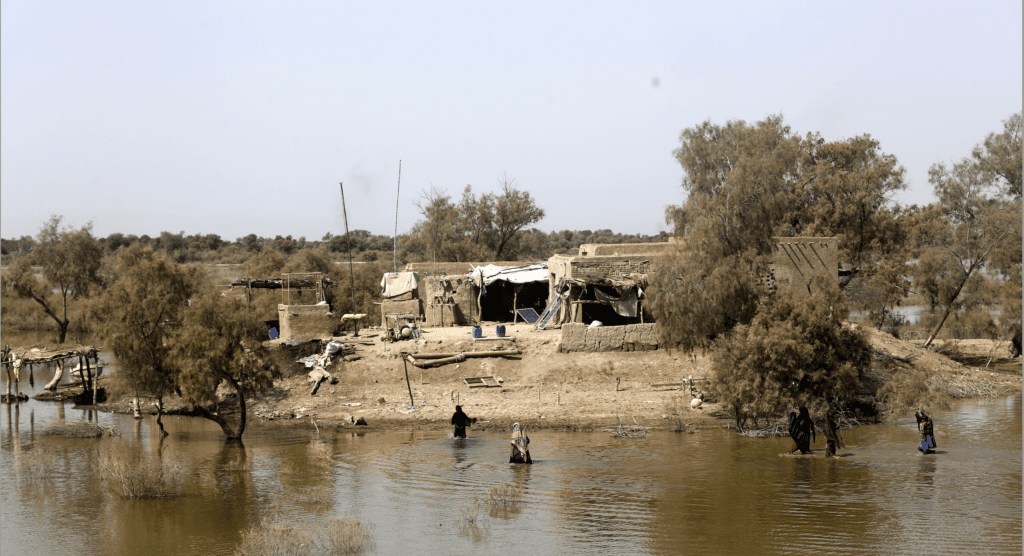
Climate change impacts our human rights in profound ways. It threatens our right to life, our right to health, our right to education, and our right to an adequate income.
But it does not impact all of us equally. Countries like Pakistan have done little to contribute to climate change, while its population is among the most affected. Wealthy countries in North America or Europe, on the other hand, have done much more to cause climate change, but bear less severe impacts.
Our approach is currently two pronged:
At the national level in Pakistan, we are documenting the impacts of climate change on people’s human rights. In 2021, for example, we documented the devastating impact of extreme heat in Pakistan with this powerful visual essay. In 2025, we documented the severe health impacts of climate change, particularly on at-risk groups like children and older people, collecting data together with a Pakistan-based health provider, Indus Hospital & Health Network.
In addition to our research, we are elevating young Pakistani voices speaking out about climate change, from doctors and medical students to climate activists. Through these campaigns and our advocacy with government ministries, we are raising awareness about climate change impacts in the country, and pushing for the government to do more to protect those most affected.
At the international level, Amnesty is urging states – particularly wealthy, high-emitting countries – to transition away from fossil fuels as soon as possible. At international conferences like COP, we advocate for human rights to be put at the heart of all climate change decision making.
We demand that environmental defenders, including those attending events like COP, have the right to protest and have their voices heard. We have also sounded the call on the need to massively scale up funding for those countries most at risk from climate change, including Pakistan, through the loss and damage fund and other means.




Leave a Reply