


Understanding Trump’s Takeover of Policing in Washington, DC
eschelhaas
Thu, 08/14/2025 – 14:31
Understanding Trump’s Takeover of Policing in Washington, DC
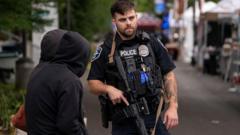
On 11 August, U.S. President Donald Trump took extraordinary measures to assert federal and military control over policing in Washington, DC. Declaring a “crime emergency” he directed Attorney General Pam Bondi to take control of the DC Metropolitan Police Department. He also ordered Secretary of Defense Pete Hegseth to mobilise 800 DC National Guard troops for duty in the nation’s capital.
Trump claimed to be taking “historic action to rescue our nation’s capital from crime, bloodshed, bedlam and squalor and worse” amid an “epidemic of crime”. While the district’s homicide rate is high relative to other major U.S. cities, violent crime is down 26 per cent year-to-date and, according to the Department of Justice, is at a 30-year low. This has led critics to wonder about Trump’s motives. Certainly an immediate trigger seems to have been a high-profile case involving Edward Coristine, who worked for the Department of Government Efficiency or DOGE. His 3:00am assault in the upscale Dupont Circle neighbourhood attracted considerable media attention. But Trump has a long history of whipping up popular and often racially charged sentiment around crime – dating back to the 1980s when as a private citizen he pushed for the death penalty for five Black teenagers who were wrongfully convicted of beating and raping a woman in Central Park and ultimately exonerated.
Attorney General Bondi’s unprecedented assumption of control over the DC police was enabled by Trump’s emergency determination and is limited by law to 30 days – an unrealistic timeframe for addressing systemic issues that contribute to crime (though he is already talking about seeking an extension from Congress). Some critics questioned whether there was sufficient factual basis for the president’s emergency determination and suggested the action might be unlawful.
As for Trump’s decision to send National Guard troops onto Washington’s streets, this follows his mobilisation of the National Guard to Los Angeles on 9 June, although in this case he may be on firmer legal ground. The federal government interprets the law to create greater latitude for the president to call on the DC National Guard for law enforcement purposes without running afoul of the Posse Comitatus Act (an 1878 law that generally prohibits use of the military for law enforcement). But as in Los Angeles, mobilisation puts guards who are not trained for law enforcement in situations where they may feel under pressure to use excessive force – particularly given presidential rhetoric that seems to egg on abuse. Trump has also threatened to up the ante with more troops, including active-duty military.
For now, it is unclear how Trump’s power flex will play out in Washington. The day following Trump’s announcement, DC National Guard troops were seen posing with tourists on the National Mall, far from the residential areas most affected by crime. But even if the move has low impact in the short term, there are longer term risks, not least that the public becomes desensitised to the militarisation of ordinary police functions that proliferate the possibilities of excessive force and escalation.




Leave a Reply