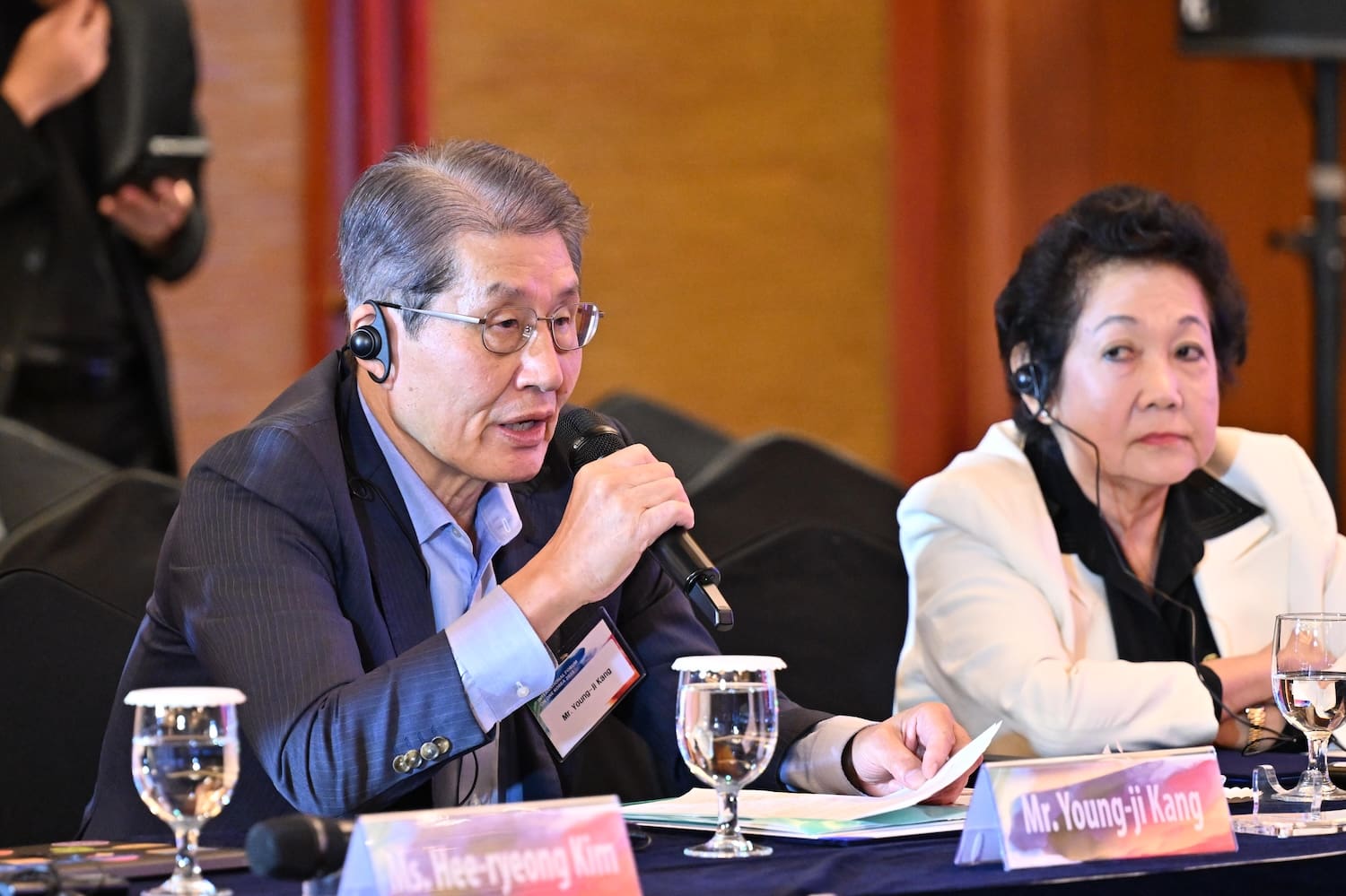
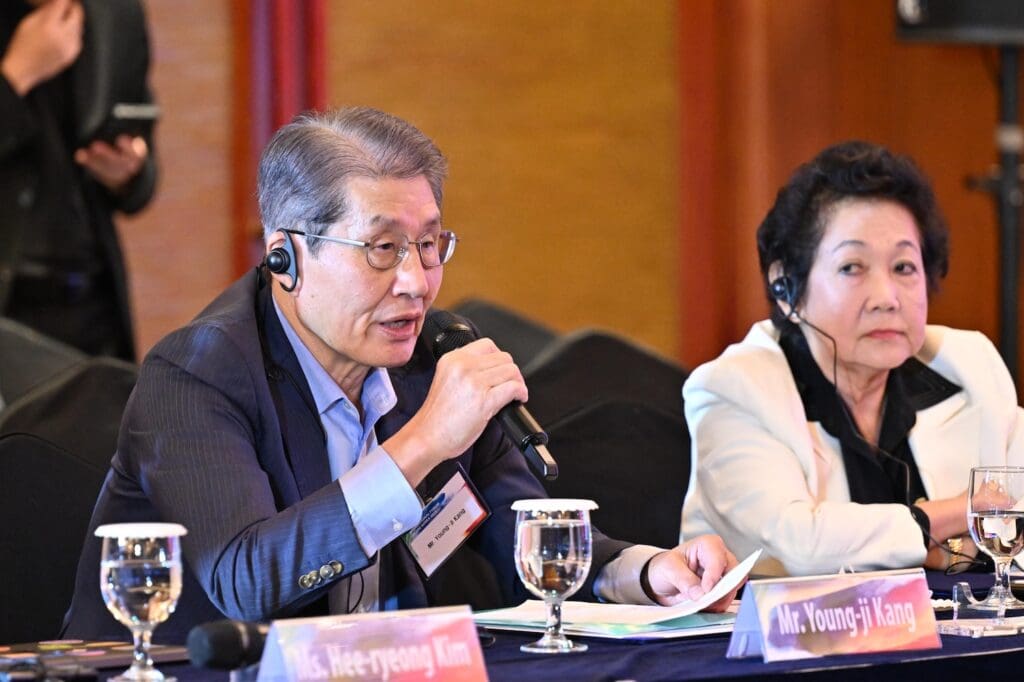
Mr. Young-ji Kang, President, East Asia Research Institute (Japan)
Behind the Korean Dream, a bold vision for peace and reunification of the Korean Peninsula is the lived experience of individuals whose identities span generations and borders. At the 13th Peace Design Forum hosted by Global Peace Foundation (GPF) Japan, one such voice emerged with clarity and depth: Dr. Yongji Kang, President of the East Asia Research Institute, a second-generation Zainichi Korean who has spent a lifetime navigating the tensions of belonging to both Japan and Korea. His story, rooted in resilience and reflection, sheds light on the human dimension of the Korean Dream and the quiet strength needed to build bridges where borders once divided.
“I Am Zainichi, and I Choose to Be a Bridge”
When I think of my life’s story, I don’t begin with conflict or victimhood. I begin with my parents, two young people from Jeollanam-do Province in Korea, who came to Japan in 1941. They weren’t forced out; they came by choice, seeking education and better opportunities. My father was the son of a modest landowner. They settled in Osaka, raised eight children, and sold goods as street peddlers. I was the sixth child. Life wasn’t easy, but we made it work.
After my father died in a car accident when I was in sixth grade, my mother, only 40 then, carried our family through, running a makgeolli restaurant and a small diner serving hormone stew. That strength became my foundation. But it didn’t shield me from discrimination. I was Zainichi, ethnically Korean, but born and raised in Japan. I didn’t belong to either place.
As a boy, I struggled with shame and confusion. I rejected my identity and felt invisible, caught between two nations and cultures that didn’t seem to want me. But all of that began to change the day I attended an academic conference in Yanbian, China. There, I met Koreans from around the world, full of pride and purpose. For the first time, I stopped seeing myself as a “borderline person.” I stopped thinking only in terms of Korean or Japanese. I started to embrace the idea of being Zainichi Asian. That shift, claiming my own subjectivity, was the beginning of healing.
A Complicated History
Zainichi Koreans have a unique status. During the Japan-Korea annexation, we held Japanese nationality. Then in 1947, that changed. By 1952, the San Francisco Peace Treaty rendered us stateless. Since then, our identities have been subject to outside forces, sometimes South Korean, sometimes North Korean, sometimes Japanese, but never fully our own.
We’ve been divided, too, into the Min-dan (aligned with South Korea) and the General Association of Korean Residents in Japan (aligned with the North). The ideological tensions between these two factions mirrored the divisions of the peninsula itself. I saw that firsthand. Even when I tried to build bridges between the two, political betrayal made unity feel like a mirage.
Yet today, something is different. The third and fourth generations of Zainichi Koreans no longer live under the weight of ideological confrontation. The old labels don’t hold the same power. Many young people have distanced themselves from ethnic politics altogether. Some take Japanese citizenship without hesitation. In my own family, I’ve encouraged my children to honor our
Korean roots, registering under Korean names, but I understand the choices they face are different from mine.
Toward an East Asian Community
What’s the way forward? No more politics. No more division. I don’t believe the Min-dan and the General Association of Korean Residents need to merge organizationally. That kind of unity may be impossible. But human relationships—real, grassroots ones—can and must be built. That’s where the future lies.
Beyond that, I envision something larger: an East Asian community that transcends national borders. A community where Japan, Korea, and even northeastern China interact freely, embracing shared culture, economy, and intermarriage. A community not rooted in nationalism but in history, shared values, and a future of mutual prosperity.
I am Zainichi. I carry both pain and pride. And I choose to speak out, not on behalf of any government, but as someone rooted in Japan, born of Korea, and committed to peace.”
The 10 Million Korean Dream Campaign
The Korean Dream envisions a peaceful, unified Korean Peninsula based on the principles of freedom, human rights, and co-prosperity. Rooted in the founding spirit of the ancient Korean nation of “Hongik Ingan,” which means “to benefit the world,” the campaign aims to transform the Korean Peninsula into a global symbol of reconciliation and cooperation. The 10 Million Korean Dream Campaign aims to rally 10 million supporters worldwide to raise a global voice for peace and reunification of the Korean Peninsula.
Sign your support for the Korean Dream
Story adapted from a personal testimony shared by Dr. Yongji Kang, President of the East Asia Research Institute, at the 13th Peace Design Forum, hosted by Global Peace Foundation Japan on June 22, 2025 in Shibuya Ward, Tokyo.